Author: Mattress Sale USA Editorial Team

  • How to Negotiate the Best Mattress Price: Scripts and Strategies That Work

    How to Negotiate the Best Mattress Price: Scripts and Strategies That Work

    Most people walk into a mattress store, accept the first price they are shown, and pay hundreds more than necessary. Mattress retail is one of the most negotiation-friendly industries in consumer commerce, with margins high enough to accommodate significant discounts without hurting the retailer. This guide gives you the exact leverage points, timing strategies, and word-for-word scripts to consistently pay less than the sticker price.

    Shop Mattress Deals on Amazon →

    Why Mattress Prices Are Highly Negotiable

    Understanding the economics helps you negotiate with confidence. The average gross margin on a mattress sold at a physical retailer is 40 to 60 percent — meaning a $1,200 mattress may have cost the retailer $480 to $720. This margin structure leaves enormous room for discounting before the sale becomes unprofitable. Compare this to electronics retail, where margins of 10 to 15 percent make negotiation largely futile.

    Commissioned salespeople add further negotiating opportunity. Most mattress sales staff earn a percentage of the sale price, typically 5 to 8 percent, on top of a base hourly rate. At month-end, when salespeople are working toward quota, the incentive to close sales overrides the incentive to maximize per-sale revenue. A sale at a slightly reduced margin is worth more to a quota-chasing salesperson than no sale at full margin.

    Price matching policies, though not always advertised, exist at virtually every major mattress chain. If a competitor stocks the same model or a comparable alternative, that price becomes your negotiating floor. Even if the exact model is not available elsewhere, a functionally equivalent option at a lower price creates real leverage.

    The Best Time to Buy for Maximum Negotiating Power

    Timing significantly affects your negotiating position. The last three days of any calendar month are consistently the best time to negotiate in-store. Salespeople working toward monthly targets become increasingly motivated to close deals at reduced margins as the deadline approaches. A deal they would reject on the 5th of the month becomes acceptable on the 29th.

    Holiday sale periods — Presidents Day, Memorial Day, Labor Day, and Black Friday — create a different dynamic. During these events, advertised prices are already reduced, but additional negotiating room often exists on accessories, delivery fees, and bundle pricing even when the mattress price itself is firm. Ask for free delivery, free removal of your old mattress, free pillows, or an extended trial period as add-ons to the advertised deal.

    Visiting on a Tuesday or Wednesday morning minimizes foot traffic competition. When the store is quiet and you are the only prospective buyer present, the salesperson has more flexibility and motivation to work with you on price rather than risk losing the only potential sale of the morning.

    Word-for-Word Scripts That Work

    Having exact language ready removes the anxiety from negotiation. These scripts have been tested in real mattress retail environments and consistently produce results.

    Opening the negotiation: “I’ve done my research and I really like this model. Before I commit, is this the best price you can do today?” This phrasing is non-confrontational, signals you are a serious buyer, and opens the door without making a specific demand that forces a yes-or-no answer.

    Using a competitor price: “I found a comparable mattress at [competitor] for $X. Can you match that price or get close to it?” Always have the competitor price pulled up on your phone. The visual confirmation makes the leverage credible and harder to dismiss.

    Asking for bundles instead of price cuts: “If the mattress price is firm, can you include free delivery and haul-away?” Retailers often have more flexibility on accessories and services than on the mattress price itself, because accessories carry even higher margins than the mattress.

    The walk-away close: “I appreciate your time. I’m going to check one more store before I decide.” Stand up and begin moving toward the door. In a significant percentage of cases, the salesperson will offer a further concession before you leave. This works because the salesperson knows a departed customer rarely returns.

    Requesting the manager: “Is there anything the manager could do on the price? I’m ready to buy today if we can make the numbers work.” This signals genuine buying intent while escalating to someone with more pricing authority. Frame it as helping both parties reach a deal rather than a confrontational demand.

    Negotiating Online Mattress Prices

    Online mattress brands have less negotiating flexibility than physical stores because pricing is publicly posted and consistent across all customers. However, opportunities exist for those who know where to look.

    Abandon your shopping cart. Most online mattress brands have automated cart abandonment email sequences that trigger a discount code — typically 5 to 10 percent — within 24 to 72 hours. Add the mattress to your cart, log in so the retailer has your email, and wait for the offer to arrive before completing the purchase.

    Contact customer service directly before purchasing. Representatives often have access to unpublished discount codes or can apply a promotional rate that is not currently advertised on the website. Ask simply: “Is there any current promotion or discount code I should be using?” The worst outcome is being told no — which costs nothing.

    Floor Model Pricing: The Biggest Discount Available

    Floor models represent the deepest discounts available at physical mattress retailers — typically 40 to 70 percent below regular retail on the same mattress. Understanding how to evaluate and negotiate floor model purchases unlocks savings unavailable through any other channel.

    Ask specifically about floor models before evaluating any standard inventory. Most retailers keep floor models available but do not volunteer this option unless asked. A floor model of a quality mattress is often a better purchase than a new budget mattress at a comparable price — the materials, warranty, and construction are significantly superior.

    Inspect floor models carefully. Check for stains, indentations, tears in the fabric, or unusual odors. Minor surface wear on the cover fabric is normal and does not affect sleep quality or durability. Ask the retailer when the model was placed on the floor — a model that has been displayed for six months or more has already completed most of its break-in period and will feel consistent from your first night of use.

    Negotiate the floor model price down further by noting any cosmetic imperfections you observe. Even if imperfections are minor and irrelevant to function, they are legitimate leverage points. A floor model with a small scuff on the side panel is worth less than a pristine one regardless of sleep performance.

    Confirm that the full manufacturer warranty applies to floor model purchases. Most warranties transfer to the first retail purchaser regardless of whether the unit was a floor display or a sealed unit. Get this confirmation in writing on your receipt or sale documentation before completing the transaction.

    Bundling Strategies to Maximize Total Value

    Even when the mattress price itself is non-negotiable, significant value can be captured through bundling. Accessories and services that retailers routinely include as promotional add-ons carry high margins, giving retailers room to include them without reducing profitability.

    The most valuable bundle add-ons to request are a mattress protector (retail value $50 to $150), pillow set (retail value $80 to $200), adjustable base upgrade (retail value $200 to $600 during promotions), free white-glove delivery (retail value $75 to $150), and old mattress haul-away (retail value $50 to $100). Requesting all of these simultaneously is not unreasonable during a sale event — retailers expect it and have promotional budgets allocated for exactly this purpose.

    Common Negotiating Mistakes to Avoid

    Several common errors reduce negotiating effectiveness and leave money on the table. Showing excessive enthusiasm for a specific model before negotiating signals that you have already decided to buy regardless of price, eliminating your leverage. Stay calm and reference other options you are considering throughout the conversation.

    Accepting the first counteroffer too quickly signals that you have more budget available. When a salesperson counters with a reduced price, pause and consider before accepting. A second pause and question — “Is that truly the best you can do?” — often produces a further small concession even after the first counter has been made.

    Focusing only on the mattress price while ignoring total cost misses significant savings opportunities. Delivery fees, old mattress removal, required box spring purchases, and protection plan add-ons can add hundreds to the transaction. Negotiate the total out-the-door cost rather than the mattress price alone for the best overall outcome.

    Mattress Firmness and Sleep Position Guide

    Choosing the right firmness level is one of the most important mattress decisions you will make. Firmness is measured on a 1-to-10 scale, with 1 being extremely soft and 10 being nearly rigid. The vast majority of mattresses sold fall between 3 (soft) and 8 (firm), with medium-firm in the 5 to 6 range representing the most popular option for the widest range of sleepers.

    Body weight significantly affects how a mattress actually feels in use. A medium mattress will feel firmer to a 130-pound sleeper than to a 250-pound sleeper because heavier individuals compress the comfort layers more deeply, experiencing more of the support core beneath. Some manufacturers offer mattresses in multiple firmness options for this reason, and split-firmness options exist for couples with differing preferences on each side.

    Sleep position matters as much as body weight. Side sleepers typically need softer surfaces that allow the shoulder and hip to sink in for proper spinal alignment. Back sleepers generally do best on medium to medium-firm mattresses that support the lumbar region without forcing an unnatural curve. Stomach sleepers usually need firmer options to prevent the midsection from sinking and creating lower back strain over time.

    Combination sleepers who regularly shift positions during the night benefit from medium-firm mattresses that balance pressure relief with responsive support. Latex and pocketed coil systems work better for combination sleepers than dense memory foam, which can feel restrictive during position changes and slow to respond to movement throughout the night.

    How Mattress Financing Works

    Mattress retailers frequently promote zero-percent financing as a core sales tool. Understanding exactly how these offers work helps you use financing strategically rather than falling into an expensive trap that costs more in the long run than paying full price upfront would have.

    Deferred interest is the most common structure at physical stores. Interest accrues normally during the promotional period but is waived if the full balance is paid before the period ends. Miss the deadline by even one day and all accrued interest, often 26 to 30 percent APR, gets added to your balance retroactively. This is fundamentally different from a true zero-percent APR loan where no interest accrues at all.

    True zero-percent financing is increasingly available through online brands partnering with services like Affirm or Klarna. In these arrangements, no interest accrues during the term under any circumstances. If a balance remains after the promotional period ends, standard rates apply going forward, but you will never be back-charged interest for the promotional period that has already passed.

    Your credit score affects both your available options and approval odds. Scores above 700 typically qualify for the most favorable promotional terms. Scores between 580 and 700 may qualify for financing at higher rates. Buy-now-pay-later services with softer qualification requirements offer accessible paths for shoppers with limited or imperfect credit history who still want to spread payments over time.

    Mattress Care Tips to Protect Your Investment

    A quality mattress can last 8 to 12 years with proper care, or wear out prematurely without it. A few simple maintenance habits maximize the life of your mattress regardless of what you paid or where you purchased it.

    Use a mattress protector from day one. A waterproof, breathable protector prevents moisture damage, dust mite accumulation, and staining, any of which can void your warranty or degrade materials significantly over time. This single accessory, typically costing $30 to $80, is the most cost-effective mattress care investment available and should be considered non-negotiable for any quality mattress purchase.

    Rotate your mattress every three to six months. Sleeping in the same position every night creates uneven wear patterns that accelerate sagging in high-pressure areas. Rotating 180 degrees distributes wear more evenly and meaningfully extends usable life. Most modern mattresses should not be flipped because one-sided construction with comfort layers only on the top means flipping puts you on the firm support core.

    Ensure your foundation or bed frame provides adequate support. A sagging or broken foundation accelerates mattress wear and may void warranty coverage. Platform bed slats should be no more than three inches apart for foam mattresses to prevent unsupported areas from breaking down prematurely. Box springs paired with newer foam or hybrid mattresses often provide insufficient support and should be evaluated before use to avoid accelerating wear on the comfort layers above.

    Related Guides

    Top Mattress Deals

    Zinus 12 Inch Green Tea Cooling Memory Foam Mattress [New Version], Queen, Fiberglass Free, Medium Firmness, Cooling Gel Foam, Certified Safe Foams & Fabric, Mattress in A Box

    • COOLER SLEEP AND A CLEANER PLANET – Topped with soothing gel memory foam, this mattress is designed to help keep you cool and comfortable throughout the night, and ships in a new smaller box to support a reduced carbon footprint
    • REJUVENATING SUPPORT – Pressure-relieving memory foam conforms to the shape of your body to enhance circulation and decrease stress on your joints, and is infused with cooling gel for ultimate temperature regulation
    • ALL NIGHT FRESHNESS – The all-natural green tea and purified charcoal infusions work together to help keep your mattress fresh for many nights to come

    New starting from: 299.99 $

    Go to Amazon

  • Best Mattress Deals This Month: Top Sales Ranked for 2026

    Best Mattress Deals This Month: Top Sales Ranked for 2026

    The mattress industry runs on perpetual promotions, but sorting genuine deals from inflated markdowns requires inside knowledge. This guide identifies the real bargains available right now, covering online brands, physical retailers, and clearance opportunities across every price tier. We evaluate deals on three criteria: the discount versus the established baseline price, the quality of materials relative to the sale price, and the terms attached including trial period, warranty, and financing options.

    Shop Mattress Deals on Amazon →

    Best Online-Only Mattress Deals Right Now

    Direct-to-consumer brands offer some of the most competitive pricing in the industry because they sell without showroom overhead, commissioned sales staff, or multi-tier distribution markups. Current promotions from the leading online brands represent genuine value at each price point.

    Nectar Sleep consistently offers discounts of $100 to $300 on its flagship memory foam mattress along with free pillows and a mattress protector in promotional bundles. The Nectar Original uses gel memory foam over a dense base layer, delivering above-average pressure relief at a price well below comparable in-store options. Its 365-night trial period is the longest available from any major brand, significantly reducing purchase risk.

    Casper runs sitewide promotions during major holidays, often reducing its Wave Hybrid by 15 to 20 percent. The Wave Hybrid features ergonomic zoning with targeted lumbar support — construction quality you typically pay significantly more for at a showroom. Casper’s 100-night trial gives ample time to evaluate the mattress under real sleep conditions before committing fully.

    Purple offers unique grid-based comfort technology that performs differently from both memory foam and traditional coils. Promotional events bring the Purple Plus down to competitive pricing for a hybrid at this quality level. The grid design excels at pressure relief without the heat retention that affects dense foam options, making it particularly popular with hot sleepers.

    DreamCloud Premier runs frequent promotions that include free shipping and a complimentary mattress protector. The five-layer hybrid construction provides the bounce and support of a traditional innerspring combined with foam pressure relief. During holiday events, DreamCloud consistently ranks among the best total value packages in the $900 to $1,100 range for a queen size.

    Best In-Store Mattress Deals

    Physical retailers offer advantages online brands cannot: the ability to test multiple mattresses side by side, immediate availability without shipping delays, and in-person negotiation. Current promotions at major chains include competitive pricing on several well-constructed models worth evaluating in person before buying.

    Mattress Firm runs regular promotions on Sealy and Stearns and Foster models, often pairing discounts with free adjustable base upgrades worth several hundred dollars. The Sealy Posturepedic Plus series delivers solid construction at mid-range sale pricing, with individually wrapped coils and multiple comfort layer options across firmness levels. Request pricing on the floor model if you want the deepest discount available — floor models typically sell at 40 to 60 percent below regular retail and have already been broken in.

    Sleep Number stores rarely discount their numbered models but frequently offer free smart base upgrades or extended zero-interest financing promotions during sale events. If adjustable firmness is a priority, a Sleep Number sale is the right time to buy. The i8 and i10 models in particular offer strong value when paired with a promotional financing offer that spreads payments over 24 to 36 months.

    Local mattress clearance centers represent the most underutilized buying opportunity in the market. These independent retailers carry manufacturer overstock, discontinued models, and returned mattresses at 50 to 70 percent below original retail. A quick search for mattress clearance or mattress warehouse locally surfaces options that chain retailers simply cannot match on price. Most returned mattresses are professionally sanitized and arrive in functionally new condition.

    How to Verify a Deal Is Genuine

    Not every advertised mattress sale represents actual savings. Verification takes five minutes and can prevent paying too much. Search the specific model name and size on Google Shopping and sort results by price. This surfaces the full range of retailers selling the same product. If the advertised sale price is in the bottom quarter of the price range you find, it represents genuine value. If it is at or above average, the discount is largely cosmetic.

    Check whether the model has been updated recently. Manufacturers periodically refresh model names while making minimal changes to the underlying product. A new model at full retail may be functionally identical to last year’s version on clearance elsewhere for less. Also confirm that the standard trial period and return policy apply to the sale price and are not shortened as a condition of the discount.

    Best Budget Mattresses Under $600 (Queen)

    Several brands consistently deliver quality sleep at accessible prices. These picks represent the best value at the under-$600 price point during sale periods, prioritizing durability and materials quality over premium branding.

    The Zinus Green Tea Memory Foam mattress remains a benchmark for budget buyers. Available on Amazon with regular discounts, it delivers adequate pressure relief for side and back sleepers at a price no in-store retailer can match for comparable quality. At under $250 during sale events, the value proposition is difficult to argue with for sleepers managing tight budgets who still want a new, clean, warranted mattress.

    Tuft and Needle Original foam represents the best all-around budget option for most sleepers. The proprietary foam uses graphite and cooling gel to address heat retention common in budget foam beds. At full price the T&N Original is already competitively priced; during holiday sales it consistently ranks as one of the best dollar-per-quality values in the entire market regardless of price tier.

    Linenspa hybrid mattresses combine a spring base with a thin foam comfort layer, providing more responsive support than all-foam beds at similar prices. The 8-inch hybrid suits stomach sleepers who need firmer support, and basic motion isolation makes it a reasonable choice for couples at this price point who want something better than a traditional spring mattress.

    Best Mid-Range Mattresses $600–$1,200 (Queen)

    The mid-range tier is where the most significant quality improvements per dollar occur. Materials improve substantially here, including thicker comfort layers, higher-density foams, and individually pocketed coil systems in hybrid models that deliver meaningfully better sleep than budget options.

    The Saatva Classic represents exceptional value during its frequent promotional events. Built with a Euro pillow top over individually wrapped coils and a Bonnell coil support base, it uses construction quality typically found at significantly higher price points. Available in three firmness levels and delivering outstanding lumbar support, it is a frequent recommendation for back pain sufferers who need targeted support rather than general softness.

    The Bear Elite Hybrid targets active individuals and athletes, incorporating copper-infused foam and a phase change material cover designed to regulate temperature throughout the night. During promotions it frequently drops to competitive pricing in the $900 range for a queen, with free shipping and a 120-night trial period. For sleepers who run hot or engage in regular physical activity, the Bear Elite addresses both sleep quality and recovery effectively.

    Best Premium Mattresses Currently on Sale

    Premium mattresses above $1,200 use materials and construction techniques that genuinely extend longevity and improve sleep quality. Organic certifications, natural latex, and individually zoned coil systems come standard at this tier. Sale events make these investments meaningfully more accessible.

    Avocado Green Mattress earns GOLS organic latex and GOTS organic cotton certifications — the most rigorous independent standards in the industry. During promotions the queen drops to competitive pricing for a certified organic latex hybrid. The 365-night trial period reduces purchase risk substantially. For sleepers with chemical sensitivities, hot sleepers, or those who prioritize verified sustainable sourcing, Avocado is the most defensible premium choice available.

    The Stearns and Foster Estate collection represents traditional innerspring luxury with modern construction improvements. Individual coil wrapping, cashmere comfort layers, and a 10-year non-prorated warranty make these mattresses built for genuine long-term use. Promotions at major retailers bring the Estate to near the lower end of the premium range, where its construction quality substantially exceeds other options at equivalent price points during sale events.

    Frequently Asked Questions

    How long do mattress sales typically last? Most promotional windows run 3 to 14 days. Holiday sales like Memorial Day and Labor Day run through the full weekend. Online brands occasionally run month-long promotions at lower discount depths than their peak holiday events.

    Can you negotiate mattress prices in-store? Yes, particularly at independent retailers and near month-end when salespeople are closing monthly quotas. Present a competitor price on a comparable model and ask for a match. Most physical retailers have flexibility of 5 to 15 percent beyond advertised pricing when properly motivated.

    Is a sale mattress lower quality? Not inherently. Clearance pricing typically reflects overstock, discontinued colorways, or prior-model-year inventory rather than product defects. Verify the full warranty is intact and the return policy applies normally before purchasing any discounted mattress from any source.

    When is the absolute best time to buy? Labor Day and Presidents Day historically produce the deepest average discounts across both online and physical retailers. Black Friday is most competitive for online-only brands. If these dates are far off, end-of-month in-store negotiation produces reliable savings without the wait.

    Mattress Firmness and Sleep Position Guide

    Choosing the right firmness level is one of the most important mattress decisions you will make. Firmness is measured on a 1-to-10 scale, with 1 being extremely soft and 10 being nearly rigid. The vast majority of mattresses sold fall between 3 (soft) and 8 (firm), with medium-firm in the 5 to 6 range representing the most popular option for the widest range of sleepers.

    Body weight significantly affects how a mattress actually feels in use. A medium mattress will feel firmer to a 130-pound sleeper than to a 250-pound sleeper because heavier individuals compress the comfort layers more deeply, experiencing more of the support core beneath. Some manufacturers offer mattresses in multiple firmness options for this reason, and split-firmness options exist for couples with differing preferences on each side.

    Sleep position matters as much as body weight. Side sleepers typically need softer surfaces that allow the shoulder and hip to sink in for proper spinal alignment. Back sleepers generally do best on medium to medium-firm mattresses that support the lumbar region without forcing an unnatural curve. Stomach sleepers usually need firmer options to prevent the midsection from sinking and creating lower back strain over time.

    Combination sleepers who regularly shift positions during the night benefit from medium-firm mattresses that balance pressure relief with responsive support. Latex and pocketed coil systems work better for combination sleepers than dense memory foam, which can feel restrictive during position changes and slow to respond to movement throughout the night.

    How Mattress Financing Works

    Mattress retailers frequently promote zero-percent financing as a core sales tool. Understanding exactly how these offers work helps you use financing strategically rather than falling into an expensive trap that costs more in the long run than paying full price upfront would have.

    Deferred interest is the most common structure at physical stores. Interest accrues normally during the promotional period but is waived if the full balance is paid before the period ends. Miss the deadline by even one day and all accrued interest, often 26 to 30 percent APR, gets added to your balance retroactively. This is fundamentally different from a true zero-percent APR loan where no interest accrues at all.

    True zero-percent financing is increasingly available through online brands partnering with services like Affirm or Klarna. In these arrangements, no interest accrues during the term under any circumstances. If a balance remains after the promotional period ends, standard rates apply going forward, but you will never be back-charged interest for the promotional period that has already passed.

    Your credit score affects both your available options and approval odds. Scores above 700 typically qualify for the most favorable promotional terms. Scores between 580 and 700 may qualify for financing at higher rates. Buy-now-pay-later services with softer qualification requirements offer accessible paths for shoppers with limited or imperfect credit history who still want to spread payments over time.

    Mattress Care Tips to Protect Your Investment

    A quality mattress can last 8 to 12 years with proper care, or wear out prematurely without it. A few simple maintenance habits maximize the life of your mattress regardless of what you paid or where you purchased it.

    Use a mattress protector from day one. A waterproof, breathable protector prevents moisture damage, dust mite accumulation, and staining, any of which can void your warranty or degrade materials significantly over time. This single accessory, typically costing $30 to $80, is the most cost-effective mattress care investment available and should be considered non-negotiable for any quality mattress purchase.

    Rotate your mattress every three to six months. Sleeping in the same position every night creates uneven wear patterns that accelerate sagging in high-pressure areas. Rotating 180 degrees distributes wear more evenly and meaningfully extends usable life. Most modern mattresses should not be flipped because one-sided construction with comfort layers only on the top means flipping puts you on the firm support core.

    Ensure your foundation or bed frame provides adequate support. A sagging or broken foundation accelerates mattress wear and may void warranty coverage. Platform bed slats should be no more than three inches apart for foam mattresses to prevent unsupported areas from breaking down prematurely. Box springs paired with newer foam or hybrid mattresses often provide insufficient support and should be evaluated before use to avoid accelerating wear on the comfort layers above.

    Related Guides

    Top Mattress Deals

    Zinus 12 Inch Green Tea Cooling Memory Foam Mattress [New Version], Queen, Fiberglass Free, Medium Firmness, Cooling Gel Foam, Certified Safe Foams & Fabric, Mattress in A Box

    • COOLER SLEEP AND A CLEANER PLANET – Topped with soothing gel memory foam, this mattress is designed to help keep you cool and comfortable throughout the night, and ships in a new smaller box to support a reduced carbon footprint
    • REJUVENATING SUPPORT – Pressure-relieving memory foam conforms to the shape of your body to enhance circulation and decrease stress on your joints, and is infused with cooling gel for ultimate temperature regulation
    • ALL NIGHT FRESHNESS – The all-natural green tea and purified charcoal infusions work together to help keep your mattress fresh for many nights to come

    New starting from: 299.99 $

    Go to Amazon
    Amazon Basics Cooling Gel-Infused Memory Foam Mattress Topper for Better Sleep Support, CertiPUR-US Certified, 3 inches, Queen, Blue

    • PREMIUM COMFORT ENHANCEMENT: Advanced memory foam technology provides responsive support and exceptional pressure point relief, instantly upgrading any new or existing mattress for a luxurious sleep experience.
    • COOLING GEL TECHNOLOGY: Specially formulated temperature-regulating gel infused throughout the memory foam helps regulate body temperature and dissipate heat, ensuring a cool, comfortable night’s sleep.
    • PREMIUM CERTIFIED QUALITY: Proudly made in the USA with imported materials, featuring CertiPUR-US certified foam that meets rigorous standards for content, emissions, and durability.

    New starting from: 71.53 $

    Go to Amazon

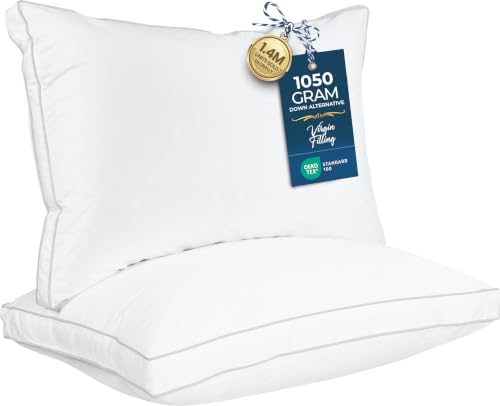
    Utopia Bedding Down Alternative Bed Pillows for Sleeping Queen Size (White), Set of 2, Soft & Fluffy Pillow with Cooling, Hotel Quality, Gusseted Pillow for Back, Stomach or Side Sleepers

    • Hotel-like Comfort – Bring the luxurious, soft, and plush hotel sleep experience into your everyday life. These queen pillows set of 2 instantly upgrade your bedroom, guest room, or dorm into a cozy retreat that feels like a 5-star stay.
    • Perfect for Every Lifestyle & Space – Whether you’re setting up your first apartment, refreshing your home, or looking for thoughtful bedroom essentials, these bed pillows are a perfect fit. Ideal for housewarming gifts, dorm rooms, guest bedrooms, or everyday home comfort.
    • Gusseted Design for Lasting Loft- Featuring gusseted edges with stylish piping, these pillows maintain their loft and shape over time. The structured design enhances durability while adding a refined, hotel-inspired look to your bedding.

    List Price : 28.89 $

    Offer: 27.44 $

    Go to Amazon

    Bare Home Queen Sheet Set – 1800 Ultra-Soft Microfiber Queen Bed Sheets – Double Brushed – Deep Pockets – Easy Fit – 4 Piece Set – Bedding Sheets & Pillowcases (Queen, Grey)

    • ULTRA SOFT SHEETS: Our proprietary hydro-brushed fabric is ultra-soft, lightweight, and airy to keep you warm in the winter and cool in the summer. Available in a wide range of colors to compliment any bedroom. Complete your bedding look with additional high quality products by Bare Home.
    • 4-PIECE QUEEN SIZE BED SHEET SET: 1 Queen Flat Sheet (90″ x 102″), 2 Standard Pillowcases (20″ x 30″), 1 Queen Fitted Sheet with all-around elastic (not just in the corners) (60″ x 80″ x 15″ Pocket). Extra deep pockets grip and fit mattresses 6 to 15 inches.
    • ALL-AROUND ELASTIC: The fitted sheet has elastic all-around to grip and fit the mattress better and to keep it in place all night long.

    List Price : 39.99 $

    Offer: 37.99 $

    Go to Amazon
  • How to Move a Mattress: The Complete Moving Guide

    How to Move a Mattress: The Complete Moving Guide

    Affiliate Disclosure: MattressSaleUSA.com may earn a commission on purchases made through links on this page. This does not affect our editorial independence or the prices you pay.

    Shop Mattress Deals on Amazon →

    Moving a Mattress: What You Need to Know Before You Start

    Moving a mattress is one of the more physically challenging aspects of any home move. Mattresses are large, heavy, and awkward — a queen mattress weighs 50–100+ lbs depending on type, and its size makes maneuvering through doorways, hallways, and stairwells genuinely difficult. With the right preparation, equipment, and technique, the process becomes manageable. This guide covers everything you need to move a mattress safely without damaging it or injuring yourself.

    Sales Insight: Memory foam and hybrid mattresses should NEVER be stored on their sides for extended periods. The foam layers can shift permanently when vertical for too long. Move and store mattresses flat whenever possible.

    Equipment You Need

    Mattress bag: A mattress bag (available at moving supply stores and Amazon for $15–$30) protects the mattress from dirt, moisture, and damage during transport. Essential for any move longer than across one room.

    Moving straps: Shoulder straps or moving straps distribute the mattress weight to your larger muscle groups and free your hands for navigation. Two people using moving straps can move a king mattress through tight spaces with much greater control.

    Tape: Securing the mattress bag prevents it from slipping open during transport.

    Appropriate vehicle: A mattress moving truck, pickup truck, or large van. Standard cars and sedans are not appropriate for mattress transport — tying a mattress to a car roof is dangerous and risks damage to the mattress and vehicles on the road.

    Deal Tip: If you do not own a pickup truck, renting one from U-Haul, Home Depot, or Lowe’s for a few hours costs $20–$40 and is far safer and more practical than improvised mattress transport.

    Step-by-Step Moving Process

    Step 1: Strip the Bed Completely

    Remove all bedding, mattress toppers, and mattress protectors before moving. Pack these separately. Attempting to move a dressed mattress adds weight, creates grip problems, and risks soiling the bedding.

    Step 2: Bag the Mattress

    Slide the mattress bag over the mattress while it is still on the bed frame — it is much easier to bag it horizontally before lifting. Seal with tape to prevent the bag from slipping off during transport.

    Step 3: Move with Help

    Always use two people for queen and king mattresses. One person on each end, with moving straps if available. Communicate your movements — “stepping left, going through the doorway” — to coordinate and prevent injuries.

    Step 4: Navigate Doorways and Stairs

    For doorways, angle the mattress diagonally to fit through narrow openings. For stairs, one person goes below to guide while the other controls from above. Take stairs one step at a time, never rushing. Clear any obstacles from the path before beginning.

    Step 5: Transport Flat When Possible

    Memory foam and hybrid mattresses should be transported flat whenever possible. If they must be transported on their side, stand them on the long edge (not the short edge) and secure them to prevent tipping. Do not transport foam mattresses on their sides for more than a few hours.

    Sales Insight: Professional movers charge $50–$150 to move a mattress depending on distance and stairs. For valuable mattresses or difficult layouts, this cost is well worth avoiding injury and damage.

    After Moving: Setup and Care

    Once in its new location, give the mattress a few hours to re-settle if it was transported on its side. Allow 24 hours before putting on tight-fitted sheets, which can stress a mattress that needs time to return to its full dimensions after transit compression. Check for any damage to the cover or seams during the move before discarding the mattress bag documentation.

    Need a New Mattress? Shop Top Brands →

    How to Spot a Genuine Mattress Sale

    Not every advertised mattress sale represents real savings. Many retailers inflate original prices before applying percentage discounts. To protect yourself, track prices before committing. Use Google Shopping to monitor price history on specific models. If a mattress has been on sale for several months straight, that promotional price is effectively the regular price.

    Compare the same model across multiple retailers. Major brands like Sealy, Serta, and Beautyrest sell through furniture chains, mattress stores, and brand websites simultaneously. The same model can vary significantly in price between channels. Calculate the total out-the-door cost including delivery, setup, and any required add-ons before comparing deals.

    Pay close attention to trial periods during sale events. Some promotional pricing shortens the return window or introduces restocking fees not present on full-price purchases. A genuinely good sale reduces the price without reducing your consumer protections. Ask whether the standard return policy applies to the discounted price, and get the answer in writing.

    Finally, be skeptical of artificial urgency. Legitimate clearance pricing does not require a same-day decision. If a salesperson insists a price expires tonight, treat that pressure tactic as a signal to slow down. Walk out, research the model independently, and return the next day if the value is genuinely there.

    Best Times of Year to Shop Mattress Sales

    Mattress prices follow predictable seasonal patterns. Presidents Day in February consistently produces some of the deepest discounts of the year. Retailers use this long weekend to clear inventory ahead of spring model refreshes, and discounts of 30 to 50 percent on quality innerspring and hybrid mattresses are common during this window.

    Memorial Day and Labor Day bookend summer with major sale events. These holidays mark when manufacturers introduce new model lines, motivating retailers to mark down prior-year stock significantly. If you are flexible on having the very latest version, these events offer excellent value on high-quality mattresses at meaningful discounts without compromising on sleep quality.

    Black Friday and Cyber Monday have become the most competitive mattress sale period of the year. Online brands offer deep sitewide discounts, free accessories like pillows and mattress protectors, and extended trial periods. The deals are real for shoppers who have done their research in advance and know exactly what model and firmness level they are looking for.

    If you cannot wait for a major sale, the last few days of any calendar month are a reliable time to negotiate in-store. Mattress salespeople frequently work on monthly commission quotas. Visiting on the 29th or 30th, when a salesperson needs to close numbers before the month ends, often produces unadvertised discounts that are unavailable at any other point during the month.

    Online vs. In-Store Mattress Shopping

    The rise of direct-to-consumer brands has changed mattress shopping fundamentally. Online retailers typically offer lower base prices by eliminating showroom overhead, sales commissions, and distribution markups. A mattress retailing for $1,400 in a furniture store may sell for $900 on the brand website with equivalent construction quality and the same core materials.

    The tradeoff is the inability to test before buying. Online brands compensate with generous trial periods typically ranging from 100 to 365 nights, with free returns or donations to charity if the mattress does not suit you. This risk-reversal model means the in-home trial replaces the showroom experience with a far more realistic test under your actual sleep conditions.

    In-store shopping offers tactile evaluation that online descriptions cannot replicate. You can compare multiple models in a single visit, feel the difference between foam densities and coil systems, and get guidance from staff who know the full inventory. For sleepers with specific back conditions or unusual comfort preferences, this hands-on comparison provides valuable information before committing.

    The hybrid approach works best for most shoppers: visit a showroom to identify your preferred firmness level, then research equivalent models from online brands at lower price points. Financing availability also differs between channels. Physical stores frequently use deferred-interest promotions through store credit cards, while online brands partner with installment lenders like Affirm for true zero-interest payment plans that do not back-charge interest if the balance carries over.

    Understanding Mattress Warranties

    A mattress warranty is only as valuable as its specific coverage terms. Most warranties cover manufacturing defects: visible sagging beyond a threshold depth, coil breaks, fabric splitting, or foam deterioration under normal use. What they do not cover is equally important — stains, comfort preference changes, normal softening over time, or sagging that falls below the warranty threshold even if you find the mattress uncomfortable.

    The sagging threshold is the single most critical number in any warranty. A mattress sagging 0.9 inches may feel dramatically different from when it was new, but if the warranty only covers sagging of 1 inch or more, you have no recourse. Check this specific measurement in the warranty documentation before purchasing, especially during sales where terms may differ from standard retail pricing.

    Non-prorated versus prorated coverage makes a significant difference for long-term value. A 10-year non-prorated warranty provides full replacement at no cost for a decade. A 20-year prorated warranty may require you to pay 50 percent of the replacement cost in year eleven, making it substantially less valuable despite the longer stated term. Always calculate actual coverage rather than simply comparing warranty lengths side by side.

    Request the full warranty document before completing any purchase. Legitimate retailers provide written documentation rather than a verbal summary. Understanding the exact terms before buying — what is covered, what voids coverage, and what the claims process involves — saves significant frustration if a problem emerges years after the original purchase date.

    Mattress Firmness and Sleep Position Guide

    Choosing the right firmness level is one of the most important mattress decisions you will make. Firmness is measured on a 1-to-10 scale, with 1 being extremely soft and 10 being nearly rigid. The vast majority of mattresses sold fall between 3 (soft) and 8 (firm), with medium-firm in the 5 to 6 range representing the most popular option for the widest range of sleepers.

    Body weight significantly affects how a mattress actually feels in use. A medium mattress will feel firmer to a 130-pound sleeper than to a 250-pound sleeper because heavier individuals compress the comfort layers more deeply, experiencing more of the support core beneath. Some manufacturers offer mattresses in multiple firmness options for this reason, and split-firmness options exist for couples with differing preferences on each side.

    Sleep position matters as much as body weight. Side sleepers typically need softer surfaces that allow the shoulder and hip to sink in for proper spinal alignment. Back sleepers generally do best on medium to medium-firm mattresses that support the lumbar region without forcing an unnatural curve. Stomach sleepers usually need firmer options to prevent the midsection from sinking and creating lower back strain over time.

    Combination sleepers who regularly shift positions during the night benefit from medium-firm mattresses that balance pressure relief with responsive support. Latex and pocketed coil systems work better for combination sleepers than dense memory foam, which can feel restrictive during position changes and slow to respond to movement throughout the night.

    How Mattress Financing Works

    Mattress retailers frequently promote zero-percent financing as a core sales tool. Understanding exactly how these offers work helps you use financing strategically rather than falling into an expensive trap that costs more in the long run than paying full price upfront would have.

    Deferred interest is the most common structure at physical stores. Interest accrues normally during the promotional period but is waived if the full balance is paid before the period ends. Miss the deadline by even one day and all accrued interest, often 26 to 30 percent APR, gets added to your balance retroactively. This is fundamentally different from a true zero-percent APR loan where no interest accrues at all.

    True zero-percent financing is increasingly available through online brands partnering with services like Affirm or Klarna. In these arrangements, no interest accrues during the term under any circumstances. If a balance remains after the promotional period ends, standard rates apply going forward, but you will never be back-charged interest for the promotional period that has already passed.

    Your credit score affects both your available options and approval odds. Scores above 700 typically qualify for the most favorable promotional terms. Scores between 580 and 700 may qualify for financing at higher rates. Buy-now-pay-later services with softer qualification requirements offer accessible paths for shoppers with limited or imperfect credit history who still want to spread payments over time.

    Mattress Care Tips to Protect Your Investment

    A quality mattress can last 8 to 12 years with proper care, or wear out prematurely without it. A few simple maintenance habits maximize the life of your mattress regardless of what you paid or where you purchased it.

    Use a mattress protector from day one. A waterproof, breathable protector prevents moisture damage, dust mite accumulation, and staining, any of which can void your warranty or degrade materials significantly over time. This single accessory, typically costing $30 to $80, is the most cost-effective mattress care investment available and should be considered non-negotiable for any quality mattress purchase.

    Rotate your mattress every three to six months. Sleeping in the same position every night creates uneven wear patterns that accelerate sagging in high-pressure areas. Rotating 180 degrees distributes wear more evenly and meaningfully extends usable life. Most modern mattresses should not be flipped because one-sided construction with comfort layers only on the top means flipping puts you on the firm support core.

    Ensure your foundation or bed frame provides adequate support. A sagging or broken foundation accelerates mattress wear and may void warranty coverage. Platform bed slats should be no more than three inches apart for foam mattresses to prevent unsupported areas from breaking down prematurely. Box springs paired with newer foam or hybrid mattresses often provide insufficient support and should be evaluated before use to avoid accelerating wear on the comfort layers above.

    Related Guides

    Top Mattress Deals

    Zinus 12 Inch Green Tea Cooling Memory Foam Mattress [New Version], Queen, Fiberglass Free, Medium Firmness, Cooling Gel Foam, Certified Safe Foams & Fabric, Mattress in A Box

    • COOLER SLEEP AND A CLEANER PLANET – Topped with soothing gel memory foam, this mattress is designed to help keep you cool and comfortable throughout the night, and ships in a new smaller box to support a reduced carbon footprint
    • REJUVENATING SUPPORT – Pressure-relieving memory foam conforms to the shape of your body to enhance circulation and decrease stress on your joints, and is infused with cooling gel for ultimate temperature regulation
    • ALL NIGHT FRESHNESS – The all-natural green tea and purified charcoal infusions work together to help keep your mattress fresh for many nights to come

    New starting from: 299.99 $

    Go to Amazon
  • How to Set Up Your New Mattress: First-Night Setup Guide

    How to Set Up Your New Mattress: First-Night Setup Guide

    Affiliate Disclosure: MattressSaleUSA.com may earn a commission on purchases made through links on this page. This does not affect our editorial independence or the prices you pay.

    Shop Mattress Deals on Amazon →

    Setting Up Your New Mattress the Right Way

    Your new mattress has arrived — whether in a box on your doorstep or delivered via white-glove service. The first few hours with a new mattress can make the difference between a smooth setup experience and a frustrating one. This guide walks through everything you need to do from delivery to your first night, ensuring your mattress is properly installed and begins its break-in period on the right foot.

    Sales Insight: Mattresses delivered in a box (compressed/rolled) require different setup steps than white-glove-delivered mattresses that arrive at full dimensions. This guide covers both scenarios.

    Before Your Mattress Arrives: Preparation

    Verify Your Bed Frame or Foundation

    Before your mattress arrives, confirm that your existing bed frame or foundation is appropriate for the new mattress. Check: the size (frame should match your mattress size exactly); center support for queen and king sizes (a center support leg is required to prevent excessive flex); slat spacing (maximum 3-inch gaps for foam and hybrid mattresses — wider gaps allow localized sagging); and overall structural integrity (no broken slats, bent frame rails, or soft spots).

    A poor foundation can void your mattress warranty and cause premature sagging regardless of mattress quality. This is worth verifying before the delivery rather than discovering it later.

    Clear the Room

    Give the delivery team or yourself clear path access. Move furniture if needed to allow the mattress to be brought in and positioned without obstacles. For boxed mattresses, you need space near the bed to unbox and unroll without the compressed mattress hitting walls or furniture.

    Deal Tip: Measure your bedroom doorways and any hallways or stairwells the mattress must pass through. A standard queen mattress is 60 x 80 inches uncompressed — it will need to be maneuvered carefully. Most doorways are 28–32 inches wide, which requires angling the mattress carefully.

    Setting Up a Bed-in-a-Box Mattress

    Position the Box

    Carry the boxed mattress to the bedroom before opening. A compressed queen mattress in a box weighs 60–80 lbs and can be maneuvered more easily in its box form. Position the box as close as possible to where the mattress will be placed.

    Open and Unroll Onto the Foundation

    Remove the outer cardboard and place the rolled/compressed mattress on your foundation or bed frame before cutting the plastic wrap. Once the vacuum seal is released, the mattress expands quickly — having it already on the foundation means you do not need to lift and reposition a rapidly expanding 70-lb mattress.

    Cut the Plastic Carefully

    Use scissors to cut only the vacuum wrap, not the mattress cover. Cut along the edge, not through the center. Remove all plastic wrap completely before leaving — getting out of bed to remove plastic at 2am is avoidable with 30 seconds of care at setup.

    Allow Expansion Time

    Most compressed mattresses reach approximately 90% of their final height within 4–6 hours and full height within 24–72 hours. You can sleep on the mattress before it is fully expanded, but the feel may be slightly firmer or softer than the final state.

    Sales Insight: New mattress odor (off-gassing) is normal and temporary. Allow 24–48 hours of ventilation in a room with open windows before sleeping if the odor is strong. Running a fan accelerates off-gassing significantly.

    First Night on a New Mattress

    Expect an adjustment period. Your body has adapted to your old mattress — even a better mattress will feel different and may feel “wrong” initially. This is a normal adjustment response, not necessarily a sign that the mattress is incorrect for you. Give the mattress 21–30 days before making a return decision.

    Use the full trial period proactively: if you notice consistent issues after 4 weeks (recurring pain, temperature problems, edge support issues), contact the brand before the trial window closes. Most brands offer comfort exchanges as an alternative to full returns — often a better solution if the brand’s quality is right but the specific feel is not.

    Shop Top-Rated Mattresses With Fast Delivery →

    How to Spot a Genuine Mattress Sale

    Not every advertised mattress sale represents real savings. Many retailers inflate original prices before applying percentage discounts. To protect yourself, track prices before committing. Use Google Shopping to monitor price history on specific models. If a mattress has been on sale for several months straight, that promotional price is effectively the regular price.

    Compare the same model across multiple retailers. Major brands like Sealy, Serta, and Beautyrest sell through furniture chains, mattress stores, and brand websites simultaneously. The same model can vary significantly in price between channels. Calculate the total out-the-door cost including delivery, setup, and any required add-ons before comparing deals.

    Pay close attention to trial periods during sale events. Some promotional pricing shortens the return window or introduces restocking fees not present on full-price purchases. A genuinely good sale reduces the price without reducing your consumer protections. Ask whether the standard return policy applies to the discounted price, and get the answer in writing.

    Finally, be skeptical of artificial urgency. Legitimate clearance pricing does not require a same-day decision. If a salesperson insists a price expires tonight, treat that pressure tactic as a signal to slow down. Walk out, research the model independently, and return the next day if the value is genuinely there.

    Best Times of Year to Shop Mattress Sales

    Mattress prices follow predictable seasonal patterns. Presidents Day in February consistently produces some of the deepest discounts of the year. Retailers use this long weekend to clear inventory ahead of spring model refreshes, and discounts of 30 to 50 percent on quality innerspring and hybrid mattresses are common during this window.

    Memorial Day and Labor Day bookend summer with major sale events. These holidays mark when manufacturers introduce new model lines, motivating retailers to mark down prior-year stock significantly. If you are flexible on having the very latest version, these events offer excellent value on high-quality mattresses at meaningful discounts without compromising on sleep quality.

    Black Friday and Cyber Monday have become the most competitive mattress sale period of the year. Online brands offer deep sitewide discounts, free accessories like pillows and mattress protectors, and extended trial periods. The deals are real for shoppers who have done their research in advance and know exactly what model and firmness level they are looking for.

    If you cannot wait for a major sale, the last few days of any calendar month are a reliable time to negotiate in-store. Mattress salespeople frequently work on monthly commission quotas. Visiting on the 29th or 30th, when a salesperson needs to close numbers before the month ends, often produces unadvertised discounts that are unavailable at any other point during the month.

    Online vs. In-Store Mattress Shopping

    The rise of direct-to-consumer brands has changed mattress shopping fundamentally. Online retailers typically offer lower base prices by eliminating showroom overhead, sales commissions, and distribution markups. A mattress retailing for $1,400 in a furniture store may sell for $900 on the brand website with equivalent construction quality and the same core materials.

    The tradeoff is the inability to test before buying. Online brands compensate with generous trial periods typically ranging from 100 to 365 nights, with free returns or donations to charity if the mattress does not suit you. This risk-reversal model means the in-home trial replaces the showroom experience with a far more realistic test under your actual sleep conditions.

    In-store shopping offers tactile evaluation that online descriptions cannot replicate. You can compare multiple models in a single visit, feel the difference between foam densities and coil systems, and get guidance from staff who know the full inventory. For sleepers with specific back conditions or unusual comfort preferences, this hands-on comparison provides valuable information before committing.

    The hybrid approach works best for most shoppers: visit a showroom to identify your preferred firmness level, then research equivalent models from online brands at lower price points. Financing availability also differs between channels. Physical stores frequently use deferred-interest promotions through store credit cards, while online brands partner with installment lenders like Affirm for true zero-interest payment plans that do not back-charge interest if the balance carries over.

    Understanding Mattress Warranties

    A mattress warranty is only as valuable as its specific coverage terms. Most warranties cover manufacturing defects: visible sagging beyond a threshold depth, coil breaks, fabric splitting, or foam deterioration under normal use. What they do not cover is equally important — stains, comfort preference changes, normal softening over time, or sagging that falls below the warranty threshold even if you find the mattress uncomfortable.

    The sagging threshold is the single most critical number in any warranty. A mattress sagging 0.9 inches may feel dramatically different from when it was new, but if the warranty only covers sagging of 1 inch or more, you have no recourse. Check this specific measurement in the warranty documentation before purchasing, especially during sales where terms may differ from standard retail pricing.

    Non-prorated versus prorated coverage makes a significant difference for long-term value. A 10-year non-prorated warranty provides full replacement at no cost for a decade. A 20-year prorated warranty may require you to pay 50 percent of the replacement cost in year eleven, making it substantially less valuable despite the longer stated term. Always calculate actual coverage rather than simply comparing warranty lengths side by side.

    Request the full warranty document before completing any purchase. Legitimate retailers provide written documentation rather than a verbal summary. Understanding the exact terms before buying — what is covered, what voids coverage, and what the claims process involves — saves significant frustration if a problem emerges years after the original purchase date.

    Mattress Firmness and Sleep Position Guide

    Choosing the right firmness level is one of the most important mattress decisions you will make. Firmness is measured on a 1-to-10 scale, with 1 being extremely soft and 10 being nearly rigid. The vast majority of mattresses sold fall between 3 (soft) and 8 (firm), with medium-firm in the 5 to 6 range representing the most popular option for the widest range of sleepers.

    Body weight significantly affects how a mattress actually feels in use. A medium mattress will feel firmer to a 130-pound sleeper than to a 250-pound sleeper because heavier individuals compress the comfort layers more deeply, experiencing more of the support core beneath. Some manufacturers offer mattresses in multiple firmness options for this reason, and split-firmness options exist for couples with differing preferences on each side.

    Sleep position matters as much as body weight. Side sleepers typically need softer surfaces that allow the shoulder and hip to sink in for proper spinal alignment. Back sleepers generally do best on medium to medium-firm mattresses that support the lumbar region without forcing an unnatural curve. Stomach sleepers usually need firmer options to prevent the midsection from sinking and creating lower back strain over time.

    Combination sleepers who regularly shift positions during the night benefit from medium-firm mattresses that balance pressure relief with responsive support. Latex and pocketed coil systems work better for combination sleepers than dense memory foam, which can feel restrictive during position changes and slow to respond to movement throughout the night.

    How Mattress Financing Works

    Mattress retailers frequently promote zero-percent financing as a core sales tool. Understanding exactly how these offers work helps you use financing strategically rather than falling into an expensive trap that costs more in the long run than paying full price upfront would have.

    Deferred interest is the most common structure at physical stores. Interest accrues normally during the promotional period but is waived if the full balance is paid before the period ends. Miss the deadline by even one day and all accrued interest, often 26 to 30 percent APR, gets added to your balance retroactively. This is fundamentally different from a true zero-percent APR loan where no interest accrues at all.

    True zero-percent financing is increasingly available through online brands partnering with services like Affirm or Klarna. In these arrangements, no interest accrues during the term under any circumstances. If a balance remains after the promotional period ends, standard rates apply going forward, but you will never be back-charged interest for the promotional period that has already passed.

    Your credit score affects both your available options and approval odds. Scores above 700 typically qualify for the most favorable promotional terms. Scores between 580 and 700 may qualify for financing at higher rates. Buy-now-pay-later services with softer qualification requirements offer accessible paths for shoppers with limited or imperfect credit history who still want to spread payments over time.

    Mattress Care Tips to Protect Your Investment

    A quality mattress can last 8 to 12 years with proper care, or wear out prematurely without it. A few simple maintenance habits maximize the life of your mattress regardless of what you paid or where you purchased it.

    Use a mattress protector from day one. A waterproof, breathable protector prevents moisture damage, dust mite accumulation, and staining, any of which can void your warranty or degrade materials significantly over time. This single accessory, typically costing $30 to $80, is the most cost-effective mattress care investment available and should be considered non-negotiable for any quality mattress purchase.

    Rotate your mattress every three to six months. Sleeping in the same position every night creates uneven wear patterns that accelerate sagging in high-pressure areas. Rotating 180 degrees distributes wear more evenly and meaningfully extends usable life. Most modern mattresses should not be flipped because one-sided construction with comfort layers only on the top means flipping puts you on the firm support core.

    Ensure your foundation or bed frame provides adequate support. A sagging or broken foundation accelerates mattress wear and may void warranty coverage. Platform bed slats should be no more than three inches apart for foam mattresses to prevent unsupported areas from breaking down prematurely. Box springs paired with newer foam or hybrid mattresses often provide insufficient support and should be evaluated before use to avoid accelerating wear on the comfort layers above.

    Related Guides

    Top Mattress Deals

    Zinus 12 Inch Green Tea Cooling Memory Foam Mattress [New Version], Queen, Fiberglass Free, Medium Firmness, Cooling Gel Foam, Certified Safe Foams & Fabric, Mattress in A Box

    • COOLER SLEEP AND A CLEANER PLANET – Topped with soothing gel memory foam, this mattress is designed to help keep you cool and comfortable throughout the night, and ships in a new smaller box to support a reduced carbon footprint
    • REJUVENATING SUPPORT – Pressure-relieving memory foam conforms to the shape of your body to enhance circulation and decrease stress on your joints, and is infused with cooling gel for ultimate temperature regulation
    • ALL NIGHT FRESHNESS – The all-natural green tea and purified charcoal infusions work together to help keep your mattress fresh for many nights to come

    New starting from: 299.99 $

    Go to Amazon

  • Sleep Hygiene Tips: Build a Routine That Guarantees Better Sleep

    Sleep Hygiene Tips: Build a Routine That Guarantees Better Sleep

    Affiliate Disclosure: MattressSaleUSA.com may earn a commission on purchases made through links on this page. This does not affect our editorial independence or the prices you pay.

    Shop Mattress Deals on Amazon →

    What Is Sleep Hygiene?

    Sleep hygiene refers to the collection of habits, behaviors, and environmental conditions that influence sleep quality. The term “hygiene” is borrowed from public health — just as physical hygiene prevents illness, sleep hygiene prevents sleep disruption. Good sleep hygiene is not about rigidly following a checklist; it is about understanding which behaviors support your sleep physiology and which work against it, then building a lifestyle that optimizes your night.

    Sales Insight: The American Academy of Sleep Medicine identifies sleep hygiene as one of the first-line recommendations for insomnia and poor sleep quality. Many people can significantly improve their sleep through behavioral changes alone, without medication or professional intervention.

    Core Sleep Hygiene Principles

    Consistency: The Foundation of Good Sleep

    Your circadian rhythm — the internal biological clock that regulates sleep and wakefulness — functions best with consistency. Going to bed at the same time and waking at the same time every day (including weekends) reinforces your rhythm and makes sleep onset faster and waking easier. Even one or two late nights per week can disrupt the rhythm for days.

    The single most impactful sleep hygiene change most people can make is simply setting a consistent wake time and maintaining it regardless of when they fell asleep. This forces sleep timing to adjust rather than drifting later and later.

    Light Management

    Light is the primary signal your brain uses to set circadian timing. Morning light exposure (10–15 minutes of bright natural or artificial light immediately after waking) anchors your circadian clock and makes evening sleep timing more consistent. Evening light suppression — reducing bright light and blue light from screens in the 90 minutes before bed — allows melatonin to rise naturally and sleep onset to occur at the right time.

    Deal Tip: If you use screens in the evening, Night Mode or blue light filtering apps reduce the circadian-disrupting effect of blue light from phones and tablets. Physical blue-light-blocking glasses provide more complete filtering than software solutions.

    Temperature Management

    Body temperature naturally drops at sleep onset — supporting this process with a cool bedroom (60–67°F) significantly improves sleep onset speed and deep sleep duration. A warm bath or shower 1–2 hours before bed can also help — the rapid cooling of your body temperature after getting out of the bath mimics and accelerates the natural sleep-onset temperature drop.

    Pre-Sleep Wind-Down

    Cortisol (the stress hormone) and arousal levels need time to decline before sleep can begin. A 60–90 minute pre-sleep routine of low-stimulation activity — reading physical books, light stretching, meditation, listening to calm music — signals to your nervous system that it is time to downshift. Avoid anxiety-provoking activities (checking work email, watching intense news) in the final hour before bed.

    Caffeine Timing

    Caffeine blocks adenosine receptors — adenosine is the sleep pressure chemical that builds throughout the day. Caffeine’s half-life of 5–7 hours means that half the caffeine in a 2pm coffee is still active at 7–9pm. Cutting caffeine by noon is the conservative recommendation; sensitive individuals may need to stop by 10am.

    Alcohol Awareness

    Alcohol helps with sleep onset but disrupts sleep architecture — particularly REM sleep — in the second half of the night. The net effect is lighter, more fragmented sleep even when total hours are maintained. Limiting alcohol and allowing 3+ hours between drinking and sleep minimizes the disruption.

    Sales Insight: Perfect sleep hygiene implemented consistently for 2–3 weeks produces measurable improvements in sleep onset time, deep sleep percentage, and morning energy levels. The first week is the hardest — the benefits accelerate as the routine becomes habitual.

    Your Sleep Environment

    Your bedroom should be cool, dark, quiet, and associated exclusively with sleep and relaxation. Working, watching TV, or doing stressful activities in bed weakens the mental association between bed and sleep — a concept called stimulus control. The bed should signal your brain to prepare for sleep, not remain alert. This association is built through consistency: use your bed only for sleep (and intimate activity), and your brain learns to shift toward sleep when you lie down.

    Complete Your Sleep Environment With the Right Mattress →

    How to Spot a Genuine Mattress Sale

    Not every advertised mattress sale represents real savings. Many retailers inflate original prices before applying percentage discounts. To protect yourself, track prices before committing. Use Google Shopping to monitor price history on specific models. If a mattress has been on sale for several months straight, that promotional price is effectively the regular price.

    Compare the same model across multiple retailers. Major brands like Sealy, Serta, and Beautyrest sell through furniture chains, mattress stores, and brand websites simultaneously. The same model can vary significantly in price between channels. Calculate the total out-the-door cost including delivery, setup, and any required add-ons before comparing deals.

    Pay close attention to trial periods during sale events. Some promotional pricing shortens the return window or introduces restocking fees not present on full-price purchases. A genuinely good sale reduces the price without reducing your consumer protections. Ask whether the standard return policy applies to the discounted price, and get the answer in writing.

    Finally, be skeptical of artificial urgency. Legitimate clearance pricing does not require a same-day decision. If a salesperson insists a price expires tonight, treat that pressure tactic as a signal to slow down. Walk out, research the model independently, and return the next day if the value is genuinely there.

    Best Times of Year to Shop Mattress Sales

    Mattress prices follow predictable seasonal patterns. Presidents Day in February consistently produces some of the deepest discounts of the year. Retailers use this long weekend to clear inventory ahead of spring model refreshes, and discounts of 30 to 50 percent on quality innerspring and hybrid mattresses are common during this window.

    Memorial Day and Labor Day bookend summer with major sale events. These holidays mark when manufacturers introduce new model lines, motivating retailers to mark down prior-year stock significantly. If you are flexible on having the very latest version, these events offer excellent value on high-quality mattresses at meaningful discounts without compromising on sleep quality.

    Black Friday and Cyber Monday have become the most competitive mattress sale period of the year. Online brands offer deep sitewide discounts, free accessories like pillows and mattress protectors, and extended trial periods. The deals are real for shoppers who have done their research in advance and know exactly what model and firmness level they are looking for.

    If you cannot wait for a major sale, the last few days of any calendar month are a reliable time to negotiate in-store. Mattress salespeople frequently work on monthly commission quotas. Visiting on the 29th or 30th, when a salesperson needs to close numbers before the month ends, often produces unadvertised discounts that are unavailable at any other point during the month.

    Online vs. In-Store Mattress Shopping

    The rise of direct-to-consumer brands has changed mattress shopping fundamentally. Online retailers typically offer lower base prices by eliminating showroom overhead, sales commissions, and distribution markups. A mattress retailing for $1,400 in a furniture store may sell for $900 on the brand website with equivalent construction quality and the same core materials.

    The tradeoff is the inability to test before buying. Online brands compensate with generous trial periods typically ranging from 100 to 365 nights, with free returns or donations to charity if the mattress does not suit you. This risk-reversal model means the in-home trial replaces the showroom experience with a far more realistic test under your actual sleep conditions.

    In-store shopping offers tactile evaluation that online descriptions cannot replicate. You can compare multiple models in a single visit, feel the difference between foam densities and coil systems, and get guidance from staff who know the full inventory. For sleepers with specific back conditions or unusual comfort preferences, this hands-on comparison provides valuable information before committing.

    The hybrid approach works best for most shoppers: visit a showroom to identify your preferred firmness level, then research equivalent models from online brands at lower price points. Financing availability also differs between channels. Physical stores frequently use deferred-interest promotions through store credit cards, while online brands partner with installment lenders like Affirm for true zero-interest payment plans that do not back-charge interest if the balance carries over.

    Understanding Mattress Warranties

    A mattress warranty is only as valuable as its specific coverage terms. Most warranties cover manufacturing defects: visible sagging beyond a threshold depth, coil breaks, fabric splitting, or foam deterioration under normal use. What they do not cover is equally important — stains, comfort preference changes, normal softening over time, or sagging that falls below the warranty threshold even if you find the mattress uncomfortable.

    The sagging threshold is the single most critical number in any warranty. A mattress sagging 0.9 inches may feel dramatically different from when it was new, but if the warranty only covers sagging of 1 inch or more, you have no recourse. Check this specific measurement in the warranty documentation before purchasing, especially during sales where terms may differ from standard retail pricing.

    Non-prorated versus prorated coverage makes a significant difference for long-term value. A 10-year non-prorated warranty provides full replacement at no cost for a decade. A 20-year prorated warranty may require you to pay 50 percent of the replacement cost in year eleven, making it substantially less valuable despite the longer stated term. Always calculate actual coverage rather than simply comparing warranty lengths side by side.

    Request the full warranty document before completing any purchase. Legitimate retailers provide written documentation rather than a verbal summary. Understanding the exact terms before buying — what is covered, what voids coverage, and what the claims process involves — saves significant frustration if a problem emerges years after the original purchase date.

    Mattress Firmness and Sleep Position Guide

    Choosing the right firmness level is one of the most important mattress decisions you will make. Firmness is measured on a 1-to-10 scale, with 1 being extremely soft and 10 being nearly rigid. The vast majority of mattresses sold fall between 3 (soft) and 8 (firm), with medium-firm in the 5 to 6 range representing the most popular option for the widest range of sleepers.

    Body weight significantly affects how a mattress actually feels in use. A medium mattress will feel firmer to a 130-pound sleeper than to a 250-pound sleeper because heavier individuals compress the comfort layers more deeply, experiencing more of the support core beneath. Some manufacturers offer mattresses in multiple firmness options for this reason, and split-firmness options exist for couples with differing preferences on each side.

    Sleep position matters as much as body weight. Side sleepers typically need softer surfaces that allow the shoulder and hip to sink in for proper spinal alignment. Back sleepers generally do best on medium to medium-firm mattresses that support the lumbar region without forcing an unnatural curve. Stomach sleepers usually need firmer options to prevent the midsection from sinking and creating lower back strain over time.

    Combination sleepers who regularly shift positions during the night benefit from medium-firm mattresses that balance pressure relief with responsive support. Latex and pocketed coil systems work better for combination sleepers than dense memory foam, which can feel restrictive during position changes and slow to respond to movement throughout the night.

    How Mattress Financing Works

    Mattress retailers frequently promote zero-percent financing as a core sales tool. Understanding exactly how these offers work helps you use financing strategically rather than falling into an expensive trap that costs more in the long run than paying full price upfront would have.

    Deferred interest is the most common structure at physical stores. Interest accrues normally during the promotional period but is waived if the full balance is paid before the period ends. Miss the deadline by even one day and all accrued interest, often 26 to 30 percent APR, gets added to your balance retroactively. This is fundamentally different from a true zero-percent APR loan where no interest accrues at all.

    True zero-percent financing is increasingly available through online brands partnering with services like Affirm or Klarna. In these arrangements, no interest accrues during the term under any circumstances. If a balance remains after the promotional period ends, standard rates apply going forward, but you will never be back-charged interest for the promotional period that has already passed.

    Your credit score affects both your available options and approval odds. Scores above 700 typically qualify for the most favorable promotional terms. Scores between 580 and 700 may qualify for financing at higher rates. Buy-now-pay-later services with softer qualification requirements offer accessible paths for shoppers with limited or imperfect credit history who still want to spread payments over time.

    Mattress Care Tips to Protect Your Investment

    A quality mattress can last 8 to 12 years with proper care, or wear out prematurely without it. A few simple maintenance habits maximize the life of your mattress regardless of what you paid or where you purchased it.

    Use a mattress protector from day one. A waterproof, breathable protector prevents moisture damage, dust mite accumulation, and staining, any of which can void your warranty or degrade materials significantly over time. This single accessory, typically costing $30 to $80, is the most cost-effective mattress care investment available and should be considered non-negotiable for any quality mattress purchase.

    Rotate your mattress every three to six months. Sleeping in the same position every night creates uneven wear patterns that accelerate sagging in high-pressure areas. Rotating 180 degrees distributes wear more evenly and meaningfully extends usable life. Most modern mattresses should not be flipped because one-sided construction with comfort layers only on the top means flipping puts you on the firm support core.

    Ensure your foundation or bed frame provides adequate support. A sagging or broken foundation accelerates mattress wear and may void warranty coverage. Platform bed slats should be no more than three inches apart for foam mattresses to prevent unsupported areas from breaking down prematurely. Box springs paired with newer foam or hybrid mattresses often provide insufficient support and should be evaluated before use to avoid accelerating wear on the comfort layers above.

    Related Guides

    Top Mattress Deals

    Zinus 12 Inch Green Tea Cooling Memory Foam Mattress [New Version], Queen, Fiberglass Free, Medium Firmness, Cooling Gel Foam, Certified Safe Foams & Fabric, Mattress in A Box

    • COOLER SLEEP AND A CLEANER PLANET – Topped with soothing gel memory foam, this mattress is designed to help keep you cool and comfortable throughout the night, and ships in a new smaller box to support a reduced carbon footprint
    • REJUVENATING SUPPORT – Pressure-relieving memory foam conforms to the shape of your body to enhance circulation and decrease stress on your joints, and is infused with cooling gel for ultimate temperature regulation
    • ALL NIGHT FRESHNESS – The all-natural green tea and purified charcoal infusions work together to help keep your mattress fresh for many nights to come

    New starting from: 299.99 $

    Go to Amazon
  • Best Mattress Toppers: Add Comfort Without Replacing Your Mattress

    Best Mattress Toppers: Add Comfort Without Replacing Your Mattress

    Affiliate Disclosure: MattressSaleUSA.com may earn a commission on purchases made through links on this page. This does not affect our editorial independence or the prices you pay.

    When Should You Use a Mattress Topper?

    A mattress topper is a removable layer of cushioning material placed on top of your existing mattress. Toppers serve several purposes: softening a mattress that is too firm; adding a layer of pressure relief to an aging mattress; providing a cooler sleeping surface; and extending the useful life of a mattress that is showing age but not yet warranting full replacement. Understanding when a topper is the right solution — and when a new mattress is needed instead — saves both money and disappointment.

    Sales Insight: A mattress topper cannot fix a structurally failed mattress. If your mattress has significant sagging, body impressions, or broken support components, a topper adds softness on top of a bad foundation and usually makes things worse, not better. Toppers are best for mattresses that are structurally sound but feel wrong.

    Mattress Topper Materials and Their Properties

    Memory Foam Toppers

    Memory foam toppers add the slow-contouring pressure relief of memory foam to any sleeping surface. A 2–3 inch memory foam topper on a firm mattress effectively transforms it to a medium-firm or medium feel. Best for: adding pressure relief to a too-firm mattress; side sleepers who need more cushioning; those who prefer memory foam feel but own a different mattress type. Watch for: heat retention — memory foam toppers run warm.

    Latex Toppers

    Natural latex toppers add responsive pressure relief with better temperature regulation than memory foam. They are more durable (5–10 years vs. 2–4 years for memory foam toppers), more breathable, and provide a bouncier feel. Best for: hot sleepers who want a foam-like topper; those who want long-lasting padding; and organic/natural material preferences. Higher cost than foam toppers.

    Down and Feather Toppers

    Down and feather toppers add a soft, plush “cloud-like” surface layer. They do not provide support or pressure relief — they simply add softness. Best for: those who want a luxurious soft feel without support concerns; and those with an already-supportive mattress that simply needs a plush surface. Not recommended for those who need pressure relief or support adjustment.

    Wool Toppers

    Natural wool toppers provide temperature regulation (cooling in summer, warming in winter), mild pressure relief, and natural fire resistance. More expensive than synthetic options but durable and naturally hypoallergenic. Best for: temperature-sensitive sleepers; organic material preferences; and those who want year-round comfort adjustment.

    Cooling Gel Toppers

    Gel foam toppers incorporate the same gel infusion technology used in mattress comfort layers to improve heat dissipation. Best for: hot sleepers who want a foam topper without the heat retention.

    Deal Tip: Measure your mattress depth before buying a topper. If you add a 3-inch topper to an already-tall mattress, getting in and out of bed may become difficult. Deep-pocket sheets (18″ or more) may also be needed to accommodate the additional height.

    Top Mattress Topper Recommendations

    Best Memory Foam Topper: Tempur-Pedic TEMPUR-Topper Supreme

    Tempur-Pedic’s 3-inch TEMPUR material provides the brand’s signature pressure relief in topper form. Premium pricing ($450–$600 for queen) but exceptional material quality that outlasts budget foam toppers.

    Best Value Memory Foam: Lucid 3-inch Gel Memory Foam Topper

    At $100–$150 for a queen, Lucid’s gel foam topper delivers functional pressure relief at an accessible price. Good for testing whether memory foam feel improves your sleep before committing to a full mattress change.

    Best Latex Topper: PlushBeds Natural Latex Topper

    GOLS-certified natural Dunlop or Talalay latex in multiple firmness options. At $350–$500 for a queen, this is a genuine upgrade that adds years of quality sleep to any mattress.

    Best Cooling Topper: Purple Mattress Topper

    Purple offers their GelFlex Grid in topper form, adding the brand’s signature cooling and pressure-relieving technology to any mattress. Premium pricing but genuine cooling performance for hot sleepers.

    Sales Insight: Mattress toppers compress and wear out much faster than mattresses — typically 2–5 years. Budget this replacement cost into your planning if using a topper as a long-term solution.

    Shop Top-Rated Mattress Toppers →

    How to Spot a Genuine Mattress Sale

    Not every advertised mattress sale represents real savings. Many retailers inflate original prices before applying percentage discounts. To protect yourself, track prices before committing. Use Google Shopping to monitor price history on specific models. If a mattress has been on sale for several months straight, that promotional price is effectively the regular price.

    Compare the same model across multiple retailers. Major brands like Sealy, Serta, and Beautyrest sell through furniture chains, mattress stores, and brand websites simultaneously. The same model can vary significantly in price between channels. Calculate the total out-the-door cost including delivery, setup, and any required add-ons before comparing deals.

    Pay close attention to trial periods during sale events. Some promotional pricing shortens the return window or introduces restocking fees not present on full-price purchases. A genuinely good sale reduces the price without reducing your consumer protections. Ask whether the standard return policy applies to the discounted price, and get the answer in writing.

    Finally, be skeptical of artificial urgency. Legitimate clearance pricing does not require a same-day decision. If a salesperson insists a price expires tonight, treat that pressure tactic as a signal to slow down. Walk out, research the model independently, and return the next day if the value is genuinely there.

    Best Times of Year to Shop Mattress Sales

    Mattress prices follow predictable seasonal patterns. Presidents Day in February consistently produces some of the deepest discounts of the year. Retailers use this long weekend to clear inventory ahead of spring model refreshes, and discounts of 30 to 50 percent on quality innerspring and hybrid mattresses are common during this window.

    Memorial Day and Labor Day bookend summer with major sale events. These holidays mark when manufacturers introduce new model lines, motivating retailers to mark down prior-year stock significantly. If you are flexible on having the very latest version, these events offer excellent value on high-quality mattresses at meaningful discounts without compromising on sleep quality.

    Black Friday and Cyber Monday have become the most competitive mattress sale period of the year. Online brands offer deep sitewide discounts, free accessories like pillows and mattress protectors, and extended trial periods. The deals are real for shoppers who have done their research in advance and know exactly what model and firmness level they are looking for.

    If you cannot wait for a major sale, the last few days of any calendar month are a reliable time to negotiate in-store. Mattress salespeople frequently work on monthly commission quotas. Visiting on the 29th or 30th, when a salesperson needs to close numbers before the month ends, often produces unadvertised discounts that are unavailable at any other point during the month.

    Online vs. In-Store Mattress Shopping

    The rise of direct-to-consumer brands has changed mattress shopping fundamentally. Online retailers typically offer lower base prices by eliminating showroom overhead, sales commissions, and distribution markups. A mattress retailing for $1,400 in a furniture store may sell for $900 on the brand website with equivalent construction quality and the same core materials.

    The tradeoff is the inability to test before buying. Online brands compensate with generous trial periods typically ranging from 100 to 365 nights, with free returns or donations to charity if the mattress does not suit you. This risk-reversal model means the in-home trial replaces the showroom experience with a far more realistic test under your actual sleep conditions.

    In-store shopping offers tactile evaluation that online descriptions cannot replicate. You can compare multiple models in a single visit, feel the difference between foam densities and coil systems, and get guidance from staff who know the full inventory. For sleepers with specific back conditions or unusual comfort preferences, this hands-on comparison provides valuable information before committing.

    The hybrid approach works best for most shoppers: visit a showroom to identify your preferred firmness level, then research equivalent models from online brands at lower price points. Financing availability also differs between channels. Physical stores frequently use deferred-interest promotions through store credit cards, while online brands partner with installment lenders like Affirm for true zero-interest payment plans that do not back-charge interest if the balance carries over.

    Understanding Mattress Warranties

    A mattress warranty is only as valuable as its specific coverage terms. Most warranties cover manufacturing defects: visible sagging beyond a threshold depth, coil breaks, fabric splitting, or foam deterioration under normal use. What they do not cover is equally important — stains, comfort preference changes, normal softening over time, or sagging that falls below the warranty threshold even if you find the mattress uncomfortable.

    The sagging threshold is the single most critical number in any warranty. A mattress sagging 0.9 inches may feel dramatically different from when it was new, but if the warranty only covers sagging of 1 inch or more, you have no recourse. Check this specific measurement in the warranty documentation before purchasing, especially during sales where terms may differ from standard retail pricing.

    Non-prorated versus prorated coverage makes a significant difference for long-term value. A 10-year non-prorated warranty provides full replacement at no cost for a decade. A 20-year prorated warranty may require you to pay 50 percent of the replacement cost in year eleven, making it substantially less valuable despite the longer stated term. Always calculate actual coverage rather than simply comparing warranty lengths side by side.

    Request the full warranty document before completing any purchase. Legitimate retailers provide written documentation rather than a verbal summary. Understanding the exact terms before buying — what is covered, what voids coverage, and what the claims process involves — saves significant frustration if a problem emerges years after the original purchase date.

    Mattress Firmness and Sleep Position Guide

    Choosing the right firmness level is one of the most important mattress decisions you will make. Firmness is measured on a 1-to-10 scale, with 1 being extremely soft and 10 being nearly rigid. The vast majority of mattresses sold fall between 3 (soft) and 8 (firm), with medium-firm in the 5 to 6 range representing the most popular option for the widest range of sleepers.

    Body weight significantly affects how a mattress actually feels in use. A medium mattress will feel firmer to a 130-pound sleeper than to a 250-pound sleeper because heavier individuals compress the comfort layers more deeply, experiencing more of the support core beneath. Some manufacturers offer mattresses in multiple firmness options for this reason, and split-firmness options exist for couples with differing preferences on each side.

    Sleep position matters as much as body weight. Side sleepers typically need softer surfaces that allow the shoulder and hip to sink in for proper spinal alignment. Back sleepers generally do best on medium to medium-firm mattresses that support the lumbar region without forcing an unnatural curve. Stomach sleepers usually need firmer options to prevent the midsection from sinking and creating lower back strain over time.

    Combination sleepers who regularly shift positions during the night benefit from medium-firm mattresses that balance pressure relief with responsive support. Latex and pocketed coil systems work better for combination sleepers than dense memory foam, which can feel restrictive during position changes and slow to respond to movement throughout the night.

    How Mattress Financing Works

    Mattress retailers frequently promote zero-percent financing as a core sales tool. Understanding exactly how these offers work helps you use financing strategically rather than falling into an expensive trap that costs more in the long run than paying full price upfront would have.

    Deferred interest is the most common structure at physical stores. Interest accrues normally during the promotional period but is waived if the full balance is paid before the period ends. Miss the deadline by even one day and all accrued interest, often 26 to 30 percent APR, gets added to your balance retroactively. This is fundamentally different from a true zero-percent APR loan where no interest accrues at all.

    True zero-percent financing is increasingly available through online brands partnering with services like Affirm or Klarna. In these arrangements, no interest accrues during the term under any circumstances. If a balance remains after the promotional period ends, standard rates apply going forward, but you will never be back-charged interest for the promotional period that has already passed.

    Your credit score affects both your available options and approval odds. Scores above 700 typically qualify for the most favorable promotional terms. Scores between 580 and 700 may qualify for financing at higher rates. Buy-now-pay-later services with softer qualification requirements offer accessible paths for shoppers with limited or imperfect credit history who still want to spread payments over time.

    Mattress Care Tips to Protect Your Investment

    A quality mattress can last 8 to 12 years with proper care, or wear out prematurely without it. A few simple maintenance habits maximize the life of your mattress regardless of what you paid or where you purchased it.

    Use a mattress protector from day one. A waterproof, breathable protector prevents moisture damage, dust mite accumulation, and staining, any of which can void your warranty or degrade materials significantly over time. This single accessory, typically costing $30 to $80, is the most cost-effective mattress care investment available and should be considered non-negotiable for any quality mattress purchase.

    Rotate your mattress every three to six months. Sleeping in the same position every night creates uneven wear patterns that accelerate sagging in high-pressure areas. Rotating 180 degrees distributes wear more evenly and meaningfully extends usable life. Most modern mattresses should not be flipped because one-sided construction with comfort layers only on the top means flipping puts you on the firm support core.

    Ensure your foundation or bed frame provides adequate support. A sagging or broken foundation accelerates mattress wear and may void warranty coverage. Platform bed slats should be no more than three inches apart for foam mattresses to prevent unsupported areas from breaking down prematurely. Box springs paired with newer foam or hybrid mattresses often provide insufficient support and should be evaluated before use to avoid accelerating wear on the comfort layers above.

    Related Guides

    Top Mattress Deals

    Amazon Basics Cooling Gel-Infused Memory Foam Mattress Topper for Better Sleep Support, CertiPUR-US Certified, 3 inches, Queen, Blue

    • PREMIUM COMFORT ENHANCEMENT: Advanced memory foam technology provides responsive support and exceptional pressure point relief, instantly upgrading any new or existing mattress for a luxurious sleep experience.
    • COOLING GEL TECHNOLOGY: Specially formulated temperature-regulating gel infused throughout the memory foam helps regulate body temperature and dissipate heat, ensuring a cool, comfortable night’s sleep.
    • PREMIUM CERTIFIED QUALITY: Proudly made in the USA with imported materials, featuring CertiPUR-US certified foam that meets rigorous standards for content, emissions, and durability.

    New starting from: 71.53 $

    Go to Amazon
  • When to Replace Your Mattress: 7 Clear Signs

    When to Replace Your Mattress: 7 Clear Signs

    Affiliate Disclosure: MattressSaleUSA.com may earn a commission on purchases made through links on this page. This does not affect our editorial independence or the prices you pay.

    ⚡ OUR TOP PICK

    Zinus Green Tea 12″ Memory Foam — Most-reviewed budget mattress on Amazon
    Price: ~$200 queen  |  Amazon return policy  |  10-year warranty

    🛒 Check Price on Amazon →

    The Challenge of Knowing When to Replace a Mattress

    Mattress degradation is gradual — it happens so slowly that many people adapt to their mattress’s declining quality without realizing how much their sleep has deteriorated. Unlike a broken appliance that stops working, a failing mattress continues to function, just less and less effectively. The result is that many people sleep on mattresses well past their useful life, accepting poor sleep as their normal when a simple upgrade would transform their nights.

    Here are seven clear signs that your mattress needs replacing, regardless of its age.

    Sales Insight: The average American mattress is replaced every 9–11 years, but surveys consistently show that people report significantly improved sleep quality after replacing a mattress that was 7 or more years old. Many are waiting too long.

    🛒 Shop Mattress Sales →

    Sign 1: Visible Sagging or Body Impressions

    The most obvious sign. Lay a straight edge (a rigid board or long ruler) across your mattress surface. If the surface dips more than 1–1.5 inches below the straight edge in your regular sleeping area, the support layer has degraded beyond effective compensation. Body impressions this deep mean your spine is sinking into a trough during the night, creating consistent misalignment and likely pain.

    🛒 Shop Mattress Sales →

    Sign 2: You Wake Up With Pain That Was Not There Before

    If you regularly wake with lower back, shoulder, or hip pain that was not present when you went to bed — and this pain improves within 30 minutes of getting up — your mattress is a primary suspect. A supportive, appropriately firm mattress should relieve pain by distributing weight and maintaining alignment. Pain that appears during sleep and improves when you leave the bed is a classic mattress-failure symptom.

    Deal Tip: A quick test: If you sleep better at a hotel than at home, that is a strong signal your mattress is contributing to poor sleep quality. Hotels typically use medium-firm mattresses in good condition — if that feels dramatically better, yours is due for replacement.

    🛒 Shop Mattress Sales →

    Sign 3: You Sleep Better Everywhere Else

    Related to the above: if you consistently sleep better at hotels, on guests’ mattresses, or on a couch than in your own bed, the problem is your mattress. Your body is not the variable — your mattress is. This is one of the clearest signals that replacement is needed.

    🛒 Shop Mattress Sales →

    Sign 4: The Mattress Is More Than 8 Years Old

    Age alone is not the only factor, but it is a relevant one. All mattress materials degrade over time. By 8 years, most foam mattresses have lost meaningful amounts of their original support and pressure relief. Hybrid mattresses may last longer, and natural latex mattresses longer still — but age is a reasonable trigger for evaluation even when visible signs are subtle.

    🛒 Shop Mattress Sales →

    Sign 5: Lumps, Bumps, or Uneven Surface

    If your mattress surface is noticeably uneven — lumpy, bumpy, or has distinct variations in firmness across the surface — the internal foam layers or coil components have broken down unevenly. Sleeping on an uneven surface creates inconsistent spinal alignment and typically produces pain on the side with inadequate support.

    🛒 Shop Mattress Sales →

    Sign 6: Squeaking or Creaking

    Noise from a mattress indicates that structural components — typically coil springs — have broken or lost their temper. A squeaking spring is a warning sign of structural failure. Beyond the noise disruption, broken springs provide inconsistent support and may eventually poke through comfort layers.

    Sales Insight: If you are on the fence about replacing your mattress, calculate the cost per night. A $1,200 mattress that lasts 10 years costs $0.33 per night — less than a cup of coffee. The daily cost of quality sleep is remarkably low when amortized over the mattress’s lifespan.

    🛒 Shop Mattress Sales →

    Sign 7: Your Sleep Has Simply Deteriorated

    Sometimes there is no single dramatic sign — just a gradual worsening of sleep quality that has become the new normal. If you are consistently waking more often, feeling less rested, or relying on coffee more than you used to, your sleep environment (including your mattress) deserves evaluation. Start by recognizing that poor sleep is not inevitable — it often has identifiable, solvable causes.

    Browse Replacement Mattresses →

    🛒 Shop Mattress Sales →

    How to Spot a Genuine Mattress Sale

    Not every advertised mattress sale represents real savings. Many retailers inflate original prices before applying percentage discounts. To protect yourself, track prices before committing. Use Google Shopping to monitor price history on specific models. If a mattress has been on sale for several months straight, that promotional price is effectively the regular price.

    Compare the same model across multiple retailers. Major brands like Sealy, Serta, and Beautyrest sell through furniture chains, mattress stores, and brand websites simultaneously. The same model can vary significantly in price between channels. Calculate the total out-the-door cost including delivery, setup, and any required add-ons before comparing deals.

    Pay close attention to trial periods during sale events. Some promotional pricing shortens the return window or introduces restocking fees not present on full-price purchases. A genuinely good sale reduces the price without reducing your consumer protections. Ask whether the standard return policy applies to the discounted price, and get the answer in writing.

    Finally, be skeptical of artificial urgency. Legitimate clearance pricing does not require a same-day decision. If a salesperson insists a price expires tonight, treat that pressure tactic as a signal to slow down. Walk out, research the model independently, and return the next day if the value is genuinely there.

    🛒 Shop Mattress Sales →

    Best Times of Year to Shop Mattress Sales

    Mattress prices follow predictable seasonal patterns. Presidents Day in February consistently produces some of the deepest discounts of the year. Retailers use this long weekend to clear inventory ahead of spring model refreshes, and discounts of 30 to 50 percent on quality innerspring and hybrid mattresses are common during this window.

    Memorial Day and Labor Day bookend summer with major sale events. These holidays mark when manufacturers introduce new model lines, motivating retailers to mark down prior-year stock significantly. If you are flexible on having the very latest version, these events offer excellent value on high-quality mattresses at meaningful discounts without compromising on sleep quality.

    Black Friday and Cyber Monday have become the most competitive mattress sale period of the year. Online brands offer deep sitewide discounts, free accessories like pillows and mattress protectors, and extended trial periods. The deals are real for shoppers who have done their research in advance and know exactly what model and firmness level they are looking for.

    If you cannot wait for a major sale, the last few days of any calendar month are a reliable time to negotiate in-store. Mattress salespeople frequently work on monthly commission quotas. Visiting on the 29th or 30th, when a salesperson needs to close numbers before the month ends, often produces unadvertised discounts that are unavailable at any other point during the month.

    🛒 Shop Mattress Sales →

    Online vs. In-Store Mattress Shopping

    The rise of direct-to-consumer brands has changed mattress shopping fundamentally. Online retailers typically offer lower base prices by eliminating showroom overhead, sales commissions, and distribution markups. A mattress retailing for $1,400 in a furniture store may sell for $900 on the brand website with equivalent construction quality and the same core materials.

    The tradeoff is the inability to test before buying. Online brands compensate with generous trial periods typically ranging from 100 to 365 nights, with free returns or donations to charity if the mattress does not suit you. This risk-reversal model means the in-home trial replaces the showroom experience with a far more realistic test under your actual sleep conditions.

    In-store shopping offers tactile evaluation that online descriptions cannot replicate. You can compare multiple models in a single visit, feel the difference between foam densities and coil systems, and get guidance from staff who know the full inventory. For sleepers with specific back conditions or unusual comfort preferences, this hands-on comparison provides valuable information before committing.

    The hybrid approach works best for most shoppers: visit a showroom to identify your preferred firmness level, then research equivalent models from online brands at lower price points. Financing availability also differs between channels. Physical stores frequently use deferred-interest promotions through store credit cards, while online brands partner with installment lenders like Affirm for true zero-interest payment plans that do not back-charge interest if the balance carries over.

    🛒 Shop Mattress Sales →

    Understanding Mattress Warranties

    A mattress warranty is only as valuable as its specific coverage terms. Most warranties cover manufacturing defects: visible sagging beyond a threshold depth, coil breaks, fabric splitting, or foam deterioration under normal use. What they do not cover is equally important — stains, comfort preference changes, normal softening over time, or sagging that falls below the warranty threshold even if you find the mattress uncomfortable.

    The sagging threshold is the single most critical number in any warranty. A mattress sagging 0.9 inches may feel dramatically different from when it was new, but if the warranty only covers sagging of 1 inch or more, you have no recourse. Check this specific measurement in the warranty documentation before purchasing, especially during sales where terms may differ from standard retail pricing.

    Non-prorated versus prorated coverage makes a significant difference for long-term value. A 10-year non-prorated warranty provides full replacement at no cost for a decade. A 20-year prorated warranty may require you to pay 50 percent of the replacement cost in year eleven, making it substantially less valuable despite the longer stated term. Always calculate actual coverage rather than simply comparing warranty lengths side by side.

    Request the full warranty document before completing any purchase. Legitimate retailers provide written documentation rather than a verbal summary. Understanding the exact terms before buying — what is covered, what voids coverage, and what the claims process involves — saves significant frustration if a problem emerges years after the original purchase date.

    🛒 Shop Mattress Sales →

    Mattress Firmness and Sleep Position Guide

    Choosing the right firmness level is one of the most important mattress decisions you will make. Firmness is measured on a 1-to-10 scale, with 1 being extremely soft and 10 being nearly rigid. The vast majority of mattresses sold fall between 3 (soft) and 8 (firm), with medium-firm in the 5 to 6 range representing the most popular option for the widest range of sleepers.

    Body weight significantly affects how a mattress actually feels in use. A medium mattress will feel firmer to a 130-pound sleeper than to a 250-pound sleeper because heavier individuals compress the comfort layers more deeply, experiencing more of the support core beneath. Some manufacturers offer mattresses in multiple firmness options for this reason, and split-firmness options exist for couples with differing preferences on each side.

    Sleep position matters as much as body weight. Side sleepers typically need softer surfaces that allow the shoulder and hip to sink in for proper spinal alignment. Back sleepers generally do best on medium to medium-firm mattresses that support the lumbar region without forcing an unnatural curve. Stomach sleepers usually need firmer options to prevent the midsection from sinking and creating lower back strain over time.

    Combination sleepers who regularly shift positions during the night benefit from medium-firm mattresses that balance pressure relief with responsive support. Latex and pocketed coil systems work better for combination sleepers than dense memory foam, which can feel restrictive during position changes and slow to respond to movement throughout the night.

    🛒 Shop Mattress Sales →

    How Mattress Financing Works

    Mattress retailers frequently promote zero-percent financing as a core sales tool. Understanding exactly how these offers work helps you use financing strategically rather than falling into an expensive trap that costs more in the long run than paying full price upfront would have.

    Deferred interest is the most common structure at physical stores. Interest accrues normally during the promotional period but is waived if the full balance is paid before the period ends. Miss the deadline by even one day and all accrued interest, often 26 to 30 percent APR, gets added to your balance retroactively. This is fundamentally different from a true zero-percent APR loan where no interest accrues at all.

    True zero-percent financing is increasingly available through online brands partnering with services like Affirm or Klarna. In these arrangements, no interest accrues during the term under any circumstances. If a balance remains after the promotional period ends, standard rates apply going forward, but you will never be back-charged interest for the promotional period that has already passed.

    Your credit score affects both your available options and approval odds. Scores above 700 typically qualify for the most favorable promotional terms. Scores between 580 and 700 may qualify for financing at higher rates. Buy-now-pay-later services with softer qualification requirements offer accessible paths for shoppers with limited or imperfect credit history who still want to spread payments over time.

    🛒 Shop Mattress Sales →

    Mattress Care Tips to Protect Your Investment

    A quality mattress can last 8 to 12 years with proper care, or wear out prematurely without it. A few simple maintenance habits maximize the life of your mattress regardless of what you paid or where you purchased it.

    Use a mattress protector from day one. A waterproof, breathable protector prevents moisture damage, dust mite accumulation, and staining, any of which can void your warranty or degrade materials significantly over time. This single accessory, typically costing $30 to $80, is the most cost-effective mattress care investment available and should be considered non-negotiable for any quality mattress purchase.

    Rotate your mattress every three to six months. Sleeping in the same position every night creates uneven wear patterns that accelerate sagging in high-pressure areas. Rotating 180 degrees distributes wear more evenly and meaningfully extends usable life. Most modern mattresses should not be flipped because one-sided construction with comfort layers only on the top means flipping puts you on the firm support core.

    Ensure your foundation or bed frame provides adequate support. A sagging or broken foundation accelerates mattress wear and may void warranty coverage. Platform bed slats should be no more than three inches apart for foam mattresses to prevent unsupported areas from breaking down prematurely. Box springs paired with newer foam or hybrid mattresses often provide insufficient support and should be evaluated before use to avoid accelerating wear on the comfort layers above.


    Shop the Best Mattress Sale Deals

    🛒 Shop on Amazon →

    🛒 Shop Clearance Mattresses →

    🌙 Shop Layla Sleep →

    Affiliate links — no extra cost to you.

    Related Guides

    Top Mattress Deals

    Zinus 12 Inch Green Tea Cooling Memory Foam Mattress [New Version], Queen, Fiberglass Free, Medium Firmness, Cooling Gel Foam, Certified Safe Foams & Fabric, Mattress in A Box

    • COOLER SLEEP AND A CLEANER PLANET – Topped with soothing gel memory foam, this mattress is designed to help keep you cool and comfortable throughout the night, and ships in a new smaller box to support a reduced carbon footprint
    • REJUVENATING SUPPORT – Pressure-relieving memory foam conforms to the shape of your body to enhance circulation and decrease stress on your joints, and is infused with cooling gel for ultimate temperature regulation
    • ALL NIGHT FRESHNESS – The all-natural green tea and purified charcoal infusions work together to help keep your mattress fresh for many nights to come

    New starting from: 299.99 $

    Go to Amazon

  • Mattress Trial Periods Explained: How to Use Them Wisely

    Mattress Trial Periods Explained: How to Use Them Wisely

    Affiliate Disclosure: MattressSaleUSA.com may earn a commission on purchases made through links on this page. This does not affect our editorial independence or the prices you pay.

    ⚡ OUR TOP PICK

    Zinus Green Tea 12″ Memory Foam — Most-reviewed budget mattress on Amazon
    Price: ~$200 queen  |  Amazon return policy  |  10-year warranty

    🛒 Check Price on Amazon →

    The Rise of the Mattress Trial Period

    The direct-to-consumer mattress revolution brought with it a consumer-friendly innovation: the sleep trial. Before online mattresses, you bought a mattress in a showroom after lying on it for two minutes under fluorescent lights. If it turned out to be wrong for you at home, you were largely stuck. Today’s major mattress brands offer sleep trials ranging from 100 to 365 nights — enough time to genuinely evaluate whether a mattress suits your sleep needs. But using the trial period wisely matters.

    Sales Insight: Casper, Helix, and Tuft & Needle offer the standard 100-night trial. Bear offers 120 nights. WinkBeds offers 120 nights. Nectar, DreamCloud, Avocado, and several others offer 365-night trials. Saatva offers 365 nights with a $99 return transportation fee.

    🛒 Shop Mattress Sales →

    How Mattress Trial Periods Work

    The mechanics are consistent across brands: you order the mattress, it is delivered (either in a box or via white-glove service), you sleep on it for the trial period, and if you are not satisfied, you initiate a return. The brand typically arranges free pickup of the mattress and issues a full refund to your original payment method.

    Most brands do not resell returned mattresses — they donate them to charities, nonprofits, and shelters. This means your “free trial” has a real cost to the brand, which is why trial periods are part of each brand’s customer acquisition cost rather than pure altruism.

    Deal Tip: Start the adaptation period clock from day one, but do not make a return decision in the first 2–3 weeks. Mattresses — particularly memory foam and latex — require a break-in period where the materials soften and conform to your body. The mattress you experience in week four is often different from week one.

    🛒 Shop Mattress Sales →

    How Long Does It Take to Know If a Mattress Is Right?

    The sleep research consensus is that a mattress needs 21–30 days of regular sleep to reach its broken-in state. Memory foam softens slightly as it warms and compresses repeatedly. Latex develops a more responsive feel as it breaks in. Your body also needs time to adapt to a new sleeping surface — muscles and joints that were compensating for an old mattress need time to adjust.

    This means the trial decision point is roughly around the 4-week mark: by then the mattress has broken in, your body has adapted, and any remaining issues are likely to be genuine incompatibility rather than adjustment period discomfort.

    🛒 Shop Mattress Sales →

    What to Evaluate During the Trial

    Pressure points: Do you wake with shoulder or hip pain? (Potentially too firm.) Does any body part feel numb? (Pressure buildup — possibly too firm.) These signals typically appear consistently within the first 2–3 weeks if the firmness is wrong.

    Back pain: Morning lower back pain that improves after getting out of bed suggests the mattress is not supporting spinal alignment. This may be a firmness issue or a material incompatibility.

    Temperature: Are you consistently overheating? Does the sleep surface feel uncomfortably warm? These signals can take a few weeks to appear consistently.

    Partner disturbance: For couples, evaluate whether your partner’s movements are disrupting your sleep throughout the trial.

    Sales Insight: If you identify a problem during the trial, contact the brand before the trial period ends. Some brands offer comfort exchanges (trading for a different firmness or model) as an alternative to a full return — often a better solution if the brand’s product was otherwise right for you.

    🛒 Shop Mattress Sales →

    The Return Process

    When initiating a return, contact the brand’s customer service (most have email, chat, and phone options). They will schedule a pickup — typically 1–2 weeks out. The mattress is picked up and you receive a full refund within 5–10 business days. Note: Saatva charges a $99 transportation fee for returns, which is their only significant exception to free returns in the premium segment. Factor this into your evaluation if considering Saatva.

    Shop Mattresses With 365-Night Trials →

    🛒 Shop Mattress Sales →

    How to Spot a Genuine Mattress Sale

    Not every advertised mattress sale represents real savings. Many retailers inflate original prices before applying percentage discounts. To protect yourself, track prices before committing. Use Google Shopping to monitor price history on specific models. If a mattress has been on sale for several months straight, that promotional price is effectively the regular price.

    Compare the same model across multiple retailers. Major brands like Sealy, Serta, and Beautyrest sell through furniture chains, mattress stores, and brand websites simultaneously. The same model can vary significantly in price between channels. Calculate the total out-the-door cost including delivery, setup, and any required add-ons before comparing deals.

    Pay close attention to trial periods during sale events. Some promotional pricing shortens the return window or introduces restocking fees not present on full-price purchases. A genuinely good sale reduces the price without reducing your consumer protections. Ask whether the standard return policy applies to the discounted price, and get the answer in writing.

    Finally, be skeptical of artificial urgency. Legitimate clearance pricing does not require a same-day decision. If a salesperson insists a price expires tonight, treat that pressure tactic as a signal to slow down. Walk out, research the model independently, and return the next day if the value is genuinely there.

    🛒 Shop Mattress Sales →

    Best Times of Year to Shop Mattress Sales

    Mattress prices follow predictable seasonal patterns. Presidents Day in February consistently produces some of the deepest discounts of the year. Retailers use this long weekend to clear inventory ahead of spring model refreshes, and discounts of 30 to 50 percent on quality innerspring and hybrid mattresses are common during this window.

    Memorial Day and Labor Day bookend summer with major sale events. These holidays mark when manufacturers introduce new model lines, motivating retailers to mark down prior-year stock significantly. If you are flexible on having the very latest version, these events offer excellent value on high-quality mattresses at meaningful discounts without compromising on sleep quality.

    Black Friday and Cyber Monday have become the most competitive mattress sale period of the year. Online brands offer deep sitewide discounts, free accessories like pillows and mattress protectors, and extended trial periods. The deals are real for shoppers who have done their research in advance and know exactly what model and firmness level they are looking for.

    If you cannot wait for a major sale, the last few days of any calendar month are a reliable time to negotiate in-store. Mattress salespeople frequently work on monthly commission quotas. Visiting on the 29th or 30th, when a salesperson needs to close numbers before the month ends, often produces unadvertised discounts that are unavailable at any other point during the month.

    🛒 Shop Mattress Sales →

    Online vs. In-Store Mattress Shopping

    The rise of direct-to-consumer brands has changed mattress shopping fundamentally. Online retailers typically offer lower base prices by eliminating showroom overhead, sales commissions, and distribution markups. A mattress retailing for $1,400 in a furniture store may sell for $900 on the brand website with equivalent construction quality and the same core materials.

    The tradeoff is the inability to test before buying. Online brands compensate with generous trial periods typically ranging from 100 to 365 nights, with free returns or donations to charity if the mattress does not suit you. This risk-reversal model means the in-home trial replaces the showroom experience with a far more realistic test under your actual sleep conditions.

    In-store shopping offers tactile evaluation that online descriptions cannot replicate. You can compare multiple models in a single visit, feel the difference between foam densities and coil systems, and get guidance from staff who know the full inventory. For sleepers with specific back conditions or unusual comfort preferences, this hands-on comparison provides valuable information before committing.

    The hybrid approach works best for most shoppers: visit a showroom to identify your preferred firmness level, then research equivalent models from online brands at lower price points. Financing availability also differs between channels. Physical stores frequently use deferred-interest promotions through store credit cards, while online brands partner with installment lenders like Affirm for true zero-interest payment plans that do not back-charge interest if the balance carries over.

    🛒 Shop Mattress Sales →

    Understanding Mattress Warranties

    A mattress warranty is only as valuable as its specific coverage terms. Most warranties cover manufacturing defects: visible sagging beyond a threshold depth, coil breaks, fabric splitting, or foam deterioration under normal use. What they do not cover is equally important — stains, comfort preference changes, normal softening over time, or sagging that falls below the warranty threshold even if you find the mattress uncomfortable.

    The sagging threshold is the single most critical number in any warranty. A mattress sagging 0.9 inches may feel dramatically different from when it was new, but if the warranty only covers sagging of 1 inch or more, you have no recourse. Check this specific measurement in the warranty documentation before purchasing, especially during sales where terms may differ from standard retail pricing.

    Non-prorated versus prorated coverage makes a significant difference for long-term value. A 10-year non-prorated warranty provides full replacement at no cost for a decade. A 20-year prorated warranty may require you to pay 50 percent of the replacement cost in year eleven, making it substantially less valuable despite the longer stated term. Always calculate actual coverage rather than simply comparing warranty lengths side by side.

    Request the full warranty document before completing any purchase. Legitimate retailers provide written documentation rather than a verbal summary. Understanding the exact terms before buying — what is covered, what voids coverage, and what the claims process involves — saves significant frustration if a problem emerges years after the original purchase date.

    🛒 Shop Mattress Sales →

    Mattress Firmness and Sleep Position Guide

    Choosing the right firmness level is one of the most important mattress decisions you will make. Firmness is measured on a 1-to-10 scale, with 1 being extremely soft and 10 being nearly rigid. The vast majority of mattresses sold fall between 3 (soft) and 8 (firm), with medium-firm in the 5 to 6 range representing the most popular option for the widest range of sleepers.

    Body weight significantly affects how a mattress actually feels in use. A medium mattress will feel firmer to a 130-pound sleeper than to a 250-pound sleeper because heavier individuals compress the comfort layers more deeply, experiencing more of the support core beneath. Some manufacturers offer mattresses in multiple firmness options for this reason, and split-firmness options exist for couples with differing preferences on each side.

    Sleep position matters as much as body weight. Side sleepers typically need softer surfaces that allow the shoulder and hip to sink in for proper spinal alignment. Back sleepers generally do best on medium to medium-firm mattresses that support the lumbar region without forcing an unnatural curve. Stomach sleepers usually need firmer options to prevent the midsection from sinking and creating lower back strain over time.

    Combination sleepers who regularly shift positions during the night benefit from medium-firm mattresses that balance pressure relief with responsive support. Latex and pocketed coil systems work better for combination sleepers than dense memory foam, which can feel restrictive during position changes and slow to respond to movement throughout the night.

    🛒 Shop Mattress Sales →

    How Mattress Financing Works

    Mattress retailers frequently promote zero-percent financing as a core sales tool. Understanding exactly how these offers work helps you use financing strategically rather than falling into an expensive trap that costs more in the long run than paying full price upfront would have.

    Deferred interest is the most common structure at physical stores. Interest accrues normally during the promotional period but is waived if the full balance is paid before the period ends. Miss the deadline by even one day and all accrued interest, often 26 to 30 percent APR, gets added to your balance retroactively. This is fundamentally different from a true zero-percent APR loan where no interest accrues at all.

    True zero-percent financing is increasingly available through online brands partnering with services like Affirm or Klarna. In these arrangements, no interest accrues during the term under any circumstances. If a balance remains after the promotional period ends, standard rates apply going forward, but you will never be back-charged interest for the promotional period that has already passed.

    Your credit score affects both your available options and approval odds. Scores above 700 typically qualify for the most favorable promotional terms. Scores between 580 and 700 may qualify for financing at higher rates. Buy-now-pay-later services with softer qualification requirements offer accessible paths for shoppers with limited or imperfect credit history who still want to spread payments over time.

    🛒 Shop Mattress Sales →

    Mattress Care Tips to Protect Your Investment

    A quality mattress can last 8 to 12 years with proper care, or wear out prematurely without it. A few simple maintenance habits maximize the life of your mattress regardless of what you paid or where you purchased it.

    Use a mattress protector from day one. A waterproof, breathable protector prevents moisture damage, dust mite accumulation, and staining, any of which can void your warranty or degrade materials significantly over time. This single accessory, typically costing $30 to $80, is the most cost-effective mattress care investment available and should be considered non-negotiable for any quality mattress purchase.

    Rotate your mattress every three to six months. Sleeping in the same position every night creates uneven wear patterns that accelerate sagging in high-pressure areas. Rotating 180 degrees distributes wear more evenly and meaningfully extends usable life. Most modern mattresses should not be flipped because one-sided construction with comfort layers only on the top means flipping puts you on the firm support core.

    Ensure your foundation or bed frame provides adequate support. A sagging or broken foundation accelerates mattress wear and may void warranty coverage. Platform bed slats should be no more than three inches apart for foam mattresses to prevent unsupported areas from breaking down prematurely. Box springs paired with newer foam or hybrid mattresses often provide insufficient support and should be evaluated before use to avoid accelerating wear on the comfort layers above.


    Shop the Best Mattress Sale Deals

    🛒 Shop on Amazon →

    🛒 Shop Clearance Mattresses →

    🌙 Shop Layla Sleep →

    Affiliate links — no extra cost to you.

    Related Guides

    Top Mattress Deals

    Zinus 12 Inch Green Tea Cooling Memory Foam Mattress [New Version], Queen, Fiberglass Free, Medium Firmness, Cooling Gel Foam, Certified Safe Foams & Fabric, Mattress in A Box

    • COOLER SLEEP AND A CLEANER PLANET – Topped with soothing gel memory foam, this mattress is designed to help keep you cool and comfortable throughout the night, and ships in a new smaller box to support a reduced carbon footprint
    • REJUVENATING SUPPORT – Pressure-relieving memory foam conforms to the shape of your body to enhance circulation and decrease stress on your joints, and is infused with cooling gel for ultimate temperature regulation
    • ALL NIGHT FRESHNESS – The all-natural green tea and purified charcoal infusions work together to help keep your mattress fresh for many nights to come

    New starting from: 299.99 $

    Go to Amazon

  • Mattress in a Box Explained: What You Need to Know

    Mattress in a Box Explained: What You Need to Know

    Affiliate Disclosure: MattressSaleUSA.com may earn a commission on purchases made through links on this page. This does not affect our editorial independence or the prices you pay.

    ⚡ OUR TOP PICK

    Zinus Green Tea 12″ Memory Foam — Most-reviewed budget mattress on Amazon
    Price: ~$200 queen  |  Amazon return policy  |  10-year warranty

    🛒 Check Price on Amazon →

    What Is a Mattress in a Box?

    The “mattress in a box” concept — compressing a foam or hybrid mattress into a compact box for shipping — transformed the mattress industry starting around 2014. What had been a white-glove showroom product requiring scheduled delivery trucks became something you could order on a phone, have arrive at your door within days, and set up in minutes. This guide explains everything you need to know about bed-in-a-box mattresses: how compression works, what to expect on delivery, and which types of mattresses can and cannot be compressed.

    Sales Insight: The first wave of bed-in-a-box brands — Casper (2014), Tuft & Needle (2012), Leesa (2015) — built multi-hundred-million dollar businesses on the compressed mattress concept. The model is now the dominant delivery mechanism for online mattress brands.

    🛒 Shop Mattress Sales →

    How Mattress Compression Works

    Foam and hybrid mattresses can be compressed because their primary materials — polyurethane foam, memory foam, and latex — are elastic enough to be compressed and vacuum-sealed without permanent damage. The process works as follows: the mattress is manufactured to full dimensions, then passed through a compression roller that reduces its height to a fraction of full size. It is then wrapped in plastic film under vacuum (removing air), rolled or folded (depending on the brand and size), and packed into a box typically 12–18 inches in diameter.

    The key to the technology is that the foam retains its elastic memory — when the compression is released, the foam expands back to its original shape and dimensions. This expansion takes 24–72 hours for most mattresses, with full height and firmness achieved within a week.

    Deal Tip: Never compress and re-compress a mattress yourself. The compression equipment applies force far beyond what home tools can replicate, and attempting to recompress a mattress can permanently damage the foam structure.

    🛒 Shop Mattress Sales →

    What to Do When Your Mattress Arrives

    Unbox carefully: Position the box near where you will set up the mattress — the compressed box is heavy (50–80+ lbs for a queen) and maneuverable, but the unrolled mattress will be much harder to move.

    Place on your bed frame or base first: Unroll or unfold the compressed mattress onto the surface it will sleep on before cutting the vacuum wrap. Once released, a queen mattress expands quickly and is difficult to reposition.

    Cut only the plastic wrap: Use scissors carefully — aggressive cutting risks cutting the mattress cover. Cut just enough to release the vacuum seal and allow the mattress to begin expanding.

    Allow full expansion time: 24–48 hours for most foam mattresses to reach close to full height; up to 72 hours for complete firmness development. You can sleep on the mattress sooner, but it may feel softer or thinner than its final state.

    Sales Insight: Hybrid mattresses (foam plus coils) are more challenging to compress than all-foam mattresses. Coil mattresses can be compressed using specialized equipment but take longer to fully expand and may have a slightly longer break-in period.

    🛒 Shop Mattress Sales →

    Which Mattresses Cannot Come in a Box

    Traditional coil-on-coil mattresses (like Saatva) cannot be safely compressed. The coil structures can be permanently deformed under compression. These mattresses require traditional delivery — either white-glove service (Saatva) or flat-truck delivery. Natural latex mattresses are also more challenging to compress and typically ship rolled rather than compressed, arriving in larger rolls than foam mattresses.

    🛒 Shop Mattress Sales →

    Advantages of Mattress in a Box

    Convenience (delivery to any door); no scheduled delivery windows; faster shipping (often 2–5 days vs. 2–4 weeks for white-glove); easier transport through tight spaces (hallways, stairs, small elevator); and typically lower delivery cost built into the mattress price. The format has been so successful that it now dominates the market across all price points.

    Shop Top Bed-in-a-Box Mattresses →

    🛒 Shop Mattress Sales →

    How to Spot a Genuine Mattress Sale

    Not every advertised mattress sale represents real savings. Many retailers inflate original prices before applying percentage discounts. To protect yourself, track prices before committing. Use Google Shopping to monitor price history on specific models. If a mattress has been on sale for several months straight, that promotional price is effectively the regular price.

    Compare the same model across multiple retailers. Major brands like Sealy, Serta, and Beautyrest sell through furniture chains, mattress stores, and brand websites simultaneously. The same model can vary significantly in price between channels. Calculate the total out-the-door cost including delivery, setup, and any required add-ons before comparing deals.

    Pay close attention to trial periods during sale events. Some promotional pricing shortens the return window or introduces restocking fees not present on full-price purchases. A genuinely good sale reduces the price without reducing your consumer protections. Ask whether the standard return policy applies to the discounted price, and get the answer in writing.

    Finally, be skeptical of artificial urgency. Legitimate clearance pricing does not require a same-day decision. If a salesperson insists a price expires tonight, treat that pressure tactic as a signal to slow down. Walk out, research the model independently, and return the next day if the value is genuinely there.

    🛒 Shop Mattress Sales →

    Best Times of Year to Shop Mattress Sales

    Mattress prices follow predictable seasonal patterns. Presidents Day in February consistently produces some of the deepest discounts of the year. Retailers use this long weekend to clear inventory ahead of spring model refreshes, and discounts of 30 to 50 percent on quality innerspring and hybrid mattresses are common during this window.

    Memorial Day and Labor Day bookend summer with major sale events. These holidays mark when manufacturers introduce new model lines, motivating retailers to mark down prior-year stock significantly. If you are flexible on having the very latest version, these events offer excellent value on high-quality mattresses at meaningful discounts without compromising on sleep quality.

    Black Friday and Cyber Monday have become the most competitive mattress sale period of the year. Online brands offer deep sitewide discounts, free accessories like pillows and mattress protectors, and extended trial periods. The deals are real for shoppers who have done their research in advance and know exactly what model and firmness level they are looking for.

    If you cannot wait for a major sale, the last few days of any calendar month are a reliable time to negotiate in-store. Mattress salespeople frequently work on monthly commission quotas. Visiting on the 29th or 30th, when a salesperson needs to close numbers before the month ends, often produces unadvertised discounts that are unavailable at any other point during the month.

    🛒 Shop Mattress Sales →

    Online vs. In-Store Mattress Shopping

    The rise of direct-to-consumer brands has changed mattress shopping fundamentally. Online retailers typically offer lower base prices by eliminating showroom overhead, sales commissions, and distribution markups. A mattress retailing for $1,400 in a furniture store may sell for $900 on the brand website with equivalent construction quality and the same core materials.

    The tradeoff is the inability to test before buying. Online brands compensate with generous trial periods typically ranging from 100 to 365 nights, with free returns or donations to charity if the mattress does not suit you. This risk-reversal model means the in-home trial replaces the showroom experience with a far more realistic test under your actual sleep conditions.

    In-store shopping offers tactile evaluation that online descriptions cannot replicate. You can compare multiple models in a single visit, feel the difference between foam densities and coil systems, and get guidance from staff who know the full inventory. For sleepers with specific back conditions or unusual comfort preferences, this hands-on comparison provides valuable information before committing.

    The hybrid approach works best for most shoppers: visit a showroom to identify your preferred firmness level, then research equivalent models from online brands at lower price points. Financing availability also differs between channels. Physical stores frequently use deferred-interest promotions through store credit cards, while online brands partner with installment lenders like Affirm for true zero-interest payment plans that do not back-charge interest if the balance carries over.

    🛒 Shop Mattress Sales →

    Understanding Mattress Warranties

    A mattress warranty is only as valuable as its specific coverage terms. Most warranties cover manufacturing defects: visible sagging beyond a threshold depth, coil breaks, fabric splitting, or foam deterioration under normal use. What they do not cover is equally important — stains, comfort preference changes, normal softening over time, or sagging that falls below the warranty threshold even if you find the mattress uncomfortable.

    The sagging threshold is the single most critical number in any warranty. A mattress sagging 0.9 inches may feel dramatically different from when it was new, but if the warranty only covers sagging of 1 inch or more, you have no recourse. Check this specific measurement in the warranty documentation before purchasing, especially during sales where terms may differ from standard retail pricing.

    Non-prorated versus prorated coverage makes a significant difference for long-term value. A 10-year non-prorated warranty provides full replacement at no cost for a decade. A 20-year prorated warranty may require you to pay 50 percent of the replacement cost in year eleven, making it substantially less valuable despite the longer stated term. Always calculate actual coverage rather than simply comparing warranty lengths side by side.

    Request the full warranty document before completing any purchase. Legitimate retailers provide written documentation rather than a verbal summary. Understanding the exact terms before buying — what is covered, what voids coverage, and what the claims process involves — saves significant frustration if a problem emerges years after the original purchase date.

    🛒 Shop Mattress Sales →

    Mattress Firmness and Sleep Position Guide

    Choosing the right firmness level is one of the most important mattress decisions you will make. Firmness is measured on a 1-to-10 scale, with 1 being extremely soft and 10 being nearly rigid. The vast majority of mattresses sold fall between 3 (soft) and 8 (firm), with medium-firm in the 5 to 6 range representing the most popular option for the widest range of sleepers.

    Body weight significantly affects how a mattress actually feels in use. A medium mattress will feel firmer to a 130-pound sleeper than to a 250-pound sleeper because heavier individuals compress the comfort layers more deeply, experiencing more of the support core beneath. Some manufacturers offer mattresses in multiple firmness options for this reason, and split-firmness options exist for couples with differing preferences on each side.

    Sleep position matters as much as body weight. Side sleepers typically need softer surfaces that allow the shoulder and hip to sink in for proper spinal alignment. Back sleepers generally do best on medium to medium-firm mattresses that support the lumbar region without forcing an unnatural curve. Stomach sleepers usually need firmer options to prevent the midsection from sinking and creating lower back strain over time.

    Combination sleepers who regularly shift positions during the night benefit from medium-firm mattresses that balance pressure relief with responsive support. Latex and pocketed coil systems work better for combination sleepers than dense memory foam, which can feel restrictive during position changes and slow to respond to movement throughout the night.

    🛒 Shop Mattress Sales →

    How Mattress Financing Works

    Mattress retailers frequently promote zero-percent financing as a core sales tool. Understanding exactly how these offers work helps you use financing strategically rather than falling into an expensive trap that costs more in the long run than paying full price upfront would have.

    Deferred interest is the most common structure at physical stores. Interest accrues normally during the promotional period but is waived if the full balance is paid before the period ends. Miss the deadline by even one day and all accrued interest, often 26 to 30 percent APR, gets added to your balance retroactively. This is fundamentally different from a true zero-percent APR loan where no interest accrues at all.

    True zero-percent financing is increasingly available through online brands partnering with services like Affirm or Klarna. In these arrangements, no interest accrues during the term under any circumstances. If a balance remains after the promotional period ends, standard rates apply going forward, but you will never be back-charged interest for the promotional period that has already passed.

    Your credit score affects both your available options and approval odds. Scores above 700 typically qualify for the most favorable promotional terms. Scores between 580 and 700 may qualify for financing at higher rates. Buy-now-pay-later services with softer qualification requirements offer accessible paths for shoppers with limited or imperfect credit history who still want to spread payments over time.

    🛒 Shop Mattress Sales →

    Mattress Care Tips to Protect Your Investment

    A quality mattress can last 8 to 12 years with proper care, or wear out prematurely without it. A few simple maintenance habits maximize the life of your mattress regardless of what you paid or where you purchased it.

    Use a mattress protector from day one. A waterproof, breathable protector prevents moisture damage, dust mite accumulation, and staining, any of which can void your warranty or degrade materials significantly over time. This single accessory, typically costing $30 to $80, is the most cost-effective mattress care investment available and should be considered non-negotiable for any quality mattress purchase.

    Rotate your mattress every three to six months. Sleeping in the same position every night creates uneven wear patterns that accelerate sagging in high-pressure areas. Rotating 180 degrees distributes wear more evenly and meaningfully extends usable life. Most modern mattresses should not be flipped because one-sided construction with comfort layers only on the top means flipping puts you on the firm support core.

    Ensure your foundation or bed frame provides adequate support. A sagging or broken foundation accelerates mattress wear and may void warranty coverage. Platform bed slats should be no more than three inches apart for foam mattresses to prevent unsupported areas from breaking down prematurely. Box springs paired with newer foam or hybrid mattresses often provide insufficient support and should be evaluated before use to avoid accelerating wear on the comfort layers above.


    Shop the Best Mattress Sale Deals

    🛒 Shop on Amazon →

    🛒 Shop Clearance Mattresses →

    🌙 Shop Layla Sleep →

    Affiliate links — no extra cost to you.

    Related Guides

    Top Mattress Deals

    Zinus 12 Inch Green Tea Cooling Memory Foam Mattress [New Version], Queen, Fiberglass Free, Medium Firmness, Cooling Gel Foam, Certified Safe Foams & Fabric, Mattress in A Box

    • COOLER SLEEP AND A CLEANER PLANET – Topped with soothing gel memory foam, this mattress is designed to help keep you cool and comfortable throughout the night, and ships in a new smaller box to support a reduced carbon footprint
    • REJUVENATING SUPPORT – Pressure-relieving memory foam conforms to the shape of your body to enhance circulation and decrease stress on your joints, and is infused with cooling gel for ultimate temperature regulation
    • ALL NIGHT FRESHNESS – The all-natural green tea and purified charcoal infusions work together to help keep your mattress fresh for many nights to come

    New starting from: 299.99 $

    Go to Amazon

  • Mattress Warranties Explained: What’s Covered and What’s Not

    Mattress Warranties Explained: What’s Covered and What’s Not

    Affiliate Disclosure: MattressSaleUSA.com may earn a commission on purchases made through links on this page. This does not affect our editorial independence or the prices you pay.

    ⚡ OUR TOP PICK

    Zinus Green Tea 12″ Memory Foam — Most-reviewed budget mattress on Amazon
    Price: ~$200 queen  |  Amazon return policy  |  10-year warranty

    🛒 Check Price on Amazon →

    Understanding Your Mattress Warranty

    A mattress warranty is your primary protection against manufacturing defects and premature material failure. But mattress warranties are often misunderstood — what they cover is more limited than most buyers assume, and the exclusions can surprise those who file claims without reading the fine print. This guide explains exactly what mattress warranties cover, what they exclude, and how to evaluate warranty quality when choosing a mattress.

    Sales Insight: The average mattress warranty in the industry is 10 years. Premium brands like Nectar, DreamCloud, and Awara offer Lifetime (Forever) Warranties. Saatva offers 15 years. These differences represent meaningful long-term value and signal brand confidence in product durability.

    🛒 Shop Mattress Sales →

    What Mattress Warranties Typically Cover

    Manufacturing Defects

    All mattress warranties cover defects in materials and workmanship — things that go wrong due to how the mattress was made rather than how it was used. These include: visible sagging or body impressions exceeding the warranty threshold (typically 1–1.5 inches measured with the mattress flat on an even surface); foam or fabric cracking or splitting under normal use; coil springs that are broken or protrude through the cover; and physical defects in the cover stitching or structure.

    Sagging Threshold

    Most warranties only cover sagging that exceeds a defined threshold — typically 1–1.5 inches. This means that a mattress with a 1-inch body impression is likely not covered under a standard warranty even if it affects sleep quality. Nectar’s lifetime warranty covers sagging greater than 1.5 inches; better-quality warranties use 1-inch thresholds.

    Deal Tip: When filing a warranty claim, document the sag with a straight edge (a ruler or board across the mattress surface) and a tape measure. Photograph the measurement with a ruler in the frame. This documentation is essential for successful warranty claims.

    🛒 Shop Mattress Sales →

    What Mattress Warranties Do NOT Cover

    Normal wear and gradual comfort changes: All mattresses soften over time as materials break in. This is not a defect — it is normal use. Warranties do not cover “I liked it firmer than it feels now.”

    Stains and damage: Nearly all mattress warranties are voided by stains or physical damage. This is why a mattress protector is essential — without one, any liquid damage can void your entire warranty coverage.

    Damage from inadequate support: Using a mattress on a broken or unsuitable foundation (slat gaps too wide, insufficient center support for larger sizes) can void warranty claims related to sagging, as the sagging may be attributable to foundation failure rather than mattress defect.

    Comfort preference changes: If you decide you want a different firmness level, that is not a warranty issue. Some brands (Helix, Saatva) offer comfort exchange programs during trial periods as a separate benefit from the warranty.

    Sales Insight: Always register your mattress warranty with the manufacturer immediately after purchase. Keep your purchase receipt. Take photos of the mattress on delivery day. These three steps ensure you have documentation if a claim is needed years later.

    🛒 Shop Mattress Sales →

    Evaluating Warranty Quality

    When comparing warranties, look for: length (longer is better, lifetime is best); sagging threshold (1 inch is better than 1.5 inches); prorated vs. non-prorated coverage (non-prorated means full replacement or repair for the entire warranty period; prorated means you pay an increasing percentage as the mattress ages); and the hassle of the claims process (brands with better reputations handle claims more generously).

    Nectar’s Lifetime Warranty and DreamCloud’s Forever Warranty are the most consumer-friendly in the market. Both provide indefinite coverage with non-prorated terms for the original owner. Saatva’s 15-year warranty and WinkBeds’ lifetime warranty are also strong options in the premium segment.

    Shop Mattresses With Lifetime Warranties →

    🛒 Shop Mattress Sales →

    How to Spot a Genuine Mattress Sale

    Not every advertised mattress sale represents real savings. Many retailers inflate original prices before applying percentage discounts. To protect yourself, track prices before committing. Use Google Shopping to monitor price history on specific models. If a mattress has been on sale for several months straight, that promotional price is effectively the regular price.

    Compare the same model across multiple retailers. Major brands like Sealy, Serta, and Beautyrest sell through furniture chains, mattress stores, and brand websites simultaneously. The same model can vary significantly in price between channels. Calculate the total out-the-door cost including delivery, setup, and any required add-ons before comparing deals.

    Pay close attention to trial periods during sale events. Some promotional pricing shortens the return window or introduces restocking fees not present on full-price purchases. A genuinely good sale reduces the price without reducing your consumer protections. Ask whether the standard return policy applies to the discounted price, and get the answer in writing.

    Finally, be skeptical of artificial urgency. Legitimate clearance pricing does not require a same-day decision. If a salesperson insists a price expires tonight, treat that pressure tactic as a signal to slow down. Walk out, research the model independently, and return the next day if the value is genuinely there.

    🛒 Shop Mattress Sales →

    Best Times of Year to Shop Mattress Sales

    Mattress prices follow predictable seasonal patterns. Presidents Day in February consistently produces some of the deepest discounts of the year. Retailers use this long weekend to clear inventory ahead of spring model refreshes, and discounts of 30 to 50 percent on quality innerspring and hybrid mattresses are common during this window.

    Memorial Day and Labor Day bookend summer with major sale events. These holidays mark when manufacturers introduce new model lines, motivating retailers to mark down prior-year stock significantly. If you are flexible on having the very latest version, these events offer excellent value on high-quality mattresses at meaningful discounts without compromising on sleep quality.

    Black Friday and Cyber Monday have become the most competitive mattress sale period of the year. Online brands offer deep sitewide discounts, free accessories like pillows and mattress protectors, and extended trial periods. The deals are real for shoppers who have done their research in advance and know exactly what model and firmness level they are looking for.

    If you cannot wait for a major sale, the last few days of any calendar month are a reliable time to negotiate in-store. Mattress salespeople frequently work on monthly commission quotas. Visiting on the 29th or 30th, when a salesperson needs to close numbers before the month ends, often produces unadvertised discounts that are unavailable at any other point during the month.

    🛒 Shop Mattress Sales →

    Online vs. In-Store Mattress Shopping

    The rise of direct-to-consumer brands has changed mattress shopping fundamentally. Online retailers typically offer lower base prices by eliminating showroom overhead, sales commissions, and distribution markups. A mattress retailing for $1,400 in a furniture store may sell for $900 on the brand website with equivalent construction quality and the same core materials.

    The tradeoff is the inability to test before buying. Online brands compensate with generous trial periods typically ranging from 100 to 365 nights, with free returns or donations to charity if the mattress does not suit you. This risk-reversal model means the in-home trial replaces the showroom experience with a far more realistic test under your actual sleep conditions.

    In-store shopping offers tactile evaluation that online descriptions cannot replicate. You can compare multiple models in a single visit, feel the difference between foam densities and coil systems, and get guidance from staff who know the full inventory. For sleepers with specific back conditions or unusual comfort preferences, this hands-on comparison provides valuable information before committing.

    The hybrid approach works best for most shoppers: visit a showroom to identify your preferred firmness level, then research equivalent models from online brands at lower price points. Financing availability also differs between channels. Physical stores frequently use deferred-interest promotions through store credit cards, while online brands partner with installment lenders like Affirm for true zero-interest payment plans that do not back-charge interest if the balance carries over.

    🛒 Shop Mattress Sales →

    Understanding Mattress Warranties

    A mattress warranty is only as valuable as its specific coverage terms. Most warranties cover manufacturing defects: visible sagging beyond a threshold depth, coil breaks, fabric splitting, or foam deterioration under normal use. What they do not cover is equally important — stains, comfort preference changes, normal softening over time, or sagging that falls below the warranty threshold even if you find the mattress uncomfortable.

    The sagging threshold is the single most critical number in any warranty. A mattress sagging 0.9 inches may feel dramatically different from when it was new, but if the warranty only covers sagging of 1 inch or more, you have no recourse. Check this specific measurement in the warranty documentation before purchasing, especially during sales where terms may differ from standard retail pricing.

    Non-prorated versus prorated coverage makes a significant difference for long-term value. A 10-year non-prorated warranty provides full replacement at no cost for a decade. A 20-year prorated warranty may require you to pay 50 percent of the replacement cost in year eleven, making it substantially less valuable despite the longer stated term. Always calculate actual coverage rather than simply comparing warranty lengths side by side.

    Request the full warranty document before completing any purchase. Legitimate retailers provide written documentation rather than a verbal summary. Understanding the exact terms before buying — what is covered, what voids coverage, and what the claims process involves — saves significant frustration if a problem emerges years after the original purchase date.

    🛒 Shop Mattress Sales →

    Mattress Firmness and Sleep Position Guide

    Choosing the right firmness level is one of the most important mattress decisions you will make. Firmness is measured on a 1-to-10 scale, with 1 being extremely soft and 10 being nearly rigid. The vast majority of mattresses sold fall between 3 (soft) and 8 (firm), with medium-firm in the 5 to 6 range representing the most popular option for the widest range of sleepers.

    Body weight significantly affects how a mattress actually feels in use. A medium mattress will feel firmer to a 130-pound sleeper than to a 250-pound sleeper because heavier individuals compress the comfort layers more deeply, experiencing more of the support core beneath. Some manufacturers offer mattresses in multiple firmness options for this reason, and split-firmness options exist for couples with differing preferences on each side.

    Sleep position matters as much as body weight. Side sleepers typically need softer surfaces that allow the shoulder and hip to sink in for proper spinal alignment. Back sleepers generally do best on medium to medium-firm mattresses that support the lumbar region without forcing an unnatural curve. Stomach sleepers usually need firmer options to prevent the midsection from sinking and creating lower back strain over time.

    Combination sleepers who regularly shift positions during the night benefit from medium-firm mattresses that balance pressure relief with responsive support. Latex and pocketed coil systems work better for combination sleepers than dense memory foam, which can feel restrictive during position changes and slow to respond to movement throughout the night.

    🛒 Shop Mattress Sales →

    How Mattress Financing Works

    Mattress retailers frequently promote zero-percent financing as a core sales tool. Understanding exactly how these offers work helps you use financing strategically rather than falling into an expensive trap that costs more in the long run than paying full price upfront would have.

    Deferred interest is the most common structure at physical stores. Interest accrues normally during the promotional period but is waived if the full balance is paid before the period ends. Miss the deadline by even one day and all accrued interest, often 26 to 30 percent APR, gets added to your balance retroactively. This is fundamentally different from a true zero-percent APR loan where no interest accrues at all.

    True zero-percent financing is increasingly available through online brands partnering with services like Affirm or Klarna. In these arrangements, no interest accrues during the term under any circumstances. If a balance remains after the promotional period ends, standard rates apply going forward, but you will never be back-charged interest for the promotional period that has already passed.

    Your credit score affects both your available options and approval odds. Scores above 700 typically qualify for the most favorable promotional terms. Scores between 580 and 700 may qualify for financing at higher rates. Buy-now-pay-later services with softer qualification requirements offer accessible paths for shoppers with limited or imperfect credit history who still want to spread payments over time.

    🛒 Shop Mattress Sales →

    Mattress Care Tips to Protect Your Investment

    A quality mattress can last 8 to 12 years with proper care, or wear out prematurely without it. A few simple maintenance habits maximize the life of your mattress regardless of what you paid or where you purchased it.

    Use a mattress protector from day one. A waterproof, breathable protector prevents moisture damage, dust mite accumulation, and staining, any of which can void your warranty or degrade materials significantly over time. This single accessory, typically costing $30 to $80, is the most cost-effective mattress care investment available and should be considered non-negotiable for any quality mattress purchase.

    Rotate your mattress every three to six months. Sleeping in the same position every night creates uneven wear patterns that accelerate sagging in high-pressure areas. Rotating 180 degrees distributes wear more evenly and meaningfully extends usable life. Most modern mattresses should not be flipped because one-sided construction with comfort layers only on the top means flipping puts you on the firm support core.

    Ensure your foundation or bed frame provides adequate support. A sagging or broken foundation accelerates mattress wear and may void warranty coverage. Platform bed slats should be no more than three inches apart for foam mattresses to prevent unsupported areas from breaking down prematurely. Box springs paired with newer foam or hybrid mattresses often provide insufficient support and should be evaluated before use to avoid accelerating wear on the comfort layers above.


    Shop the Best Mattress Sale Deals

    🛒 Shop on Amazon →

    🛒 Shop Clearance Mattresses →

    🌙 Shop Layla Sleep →

    Affiliate links — no extra cost to you.

    Related Guides

    Top Mattress Deals

    Zinus 12 Inch Green Tea Cooling Memory Foam Mattress [New Version], Queen, Fiberglass Free, Medium Firmness, Cooling Gel Foam, Certified Safe Foams & Fabric, Mattress in A Box

    • COOLER SLEEP AND A CLEANER PLANET – Topped with soothing gel memory foam, this mattress is designed to help keep you cool and comfortable throughout the night, and ships in a new smaller box to support a reduced carbon footprint
    • REJUVENATING SUPPORT – Pressure-relieving memory foam conforms to the shape of your body to enhance circulation and decrease stress on your joints, and is infused with cooling gel for ultimate temperature regulation
    • ALL NIGHT FRESHNESS – The all-natural green tea and purified charcoal infusions work together to help keep your mattress fresh for many nights to come

    New starting from: 299.99 $

    Go to Amazon